

AI stopped being a content assistant in 2025 and moved into the operational layer where it scores accounts, routes leads, personalizes journeys, and connects campaign activity to action.
We spent most of 2025 having the same conversation with clients. Most teams had adopted AI tools, productivity had improved, but finance still wanted to see pipeline impact. The teams that survived budget reviews stopped treating AI as a writing assistant and started using it for account prioritization, campaign orchestration, lead routing, and attribution. Everyone else is now being asked what the spend actually changed.
Last year, 50% of marketers reported they could demonstrate clear AI ROI. In 2026, that number dropped to 41% (Averi, 2026). Leadership stopped accepting time savings as proof and started asking which AI tools connect to pipeline, close rates, and customer acquisition cost.
Content production stopped justifying the AI budget. Leadership wants to know which tools surface active accounts, catch buying signals, tighten the sales handoff, and prove which campaigns created movement beyond faster drafts or more output.
The tools below follow the parts of the workflow where AI now has to prove something: visibility, account movement, campaign coordination, outreach, personalization, automation, and attribution.
1. ZAVI
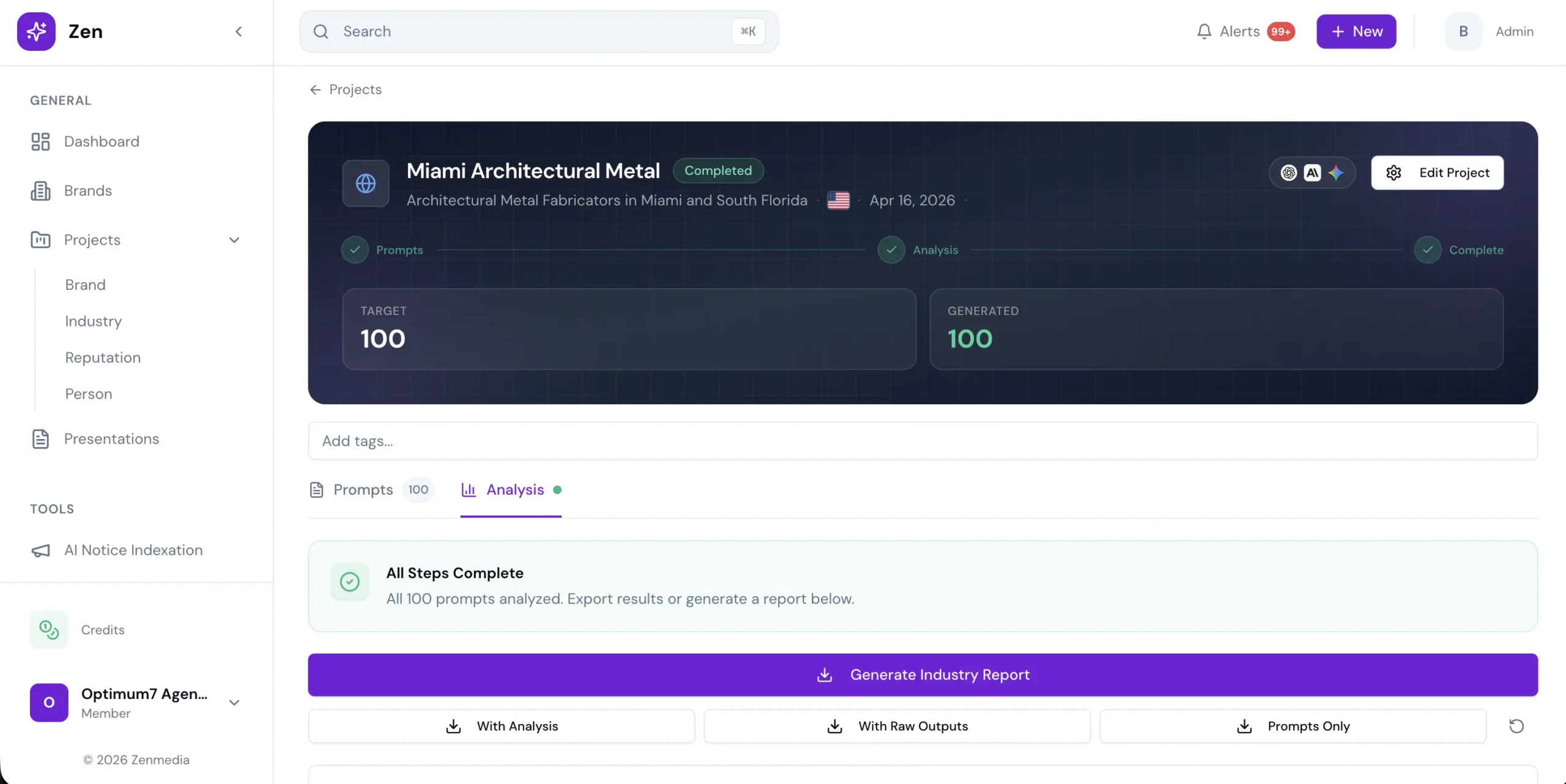
ZAVI, Zen Media’s AI Visibility Engine, shows how AI platforms perceive, recommend, and discuss your brand across ChatGPT, Claude, Gemini, Perplexity, and Grok. The platform runs buyer-intent prompts across major AI engines, then surfaces visibility scores, ranking data, sentiment analysis, competitive positioning, and the gaps leadership needs to see before deciding where to invest.
Most teams measure campaign performance after the buyer arrives. ZAVI measures what happens before that moment. A buyer researching “best enterprise CRM for manufacturing” may get five vendor names from Claude, and your brand may not be one of them. That gap can explain why qualified traffic never materializes even when everything downstream is optimized.

The platform tracks AI visibility over time, runs competitive analysis to show where rivals appear more often or with stronger framing, and generates reports showing leadership where the brand is winning AI recommendations and where it is invisible. For teams where pipeline depends on inbound interest, ZAVI answers the question traditional analytics can’t answer: why buyers who should be finding you are finding competitors instead.
2. Tofu

Tofu coordinates outreach across LinkedIn, email, paid ads, and sales so each channel responds to what the account has already done. If an account engages with a LinkedIn ad, Tofu can trigger a personalized email sequence, alert sales, and adjust retargeting without someone manually rebuilding the campaign path.
Many B2B campaigns forget what the account already did. A click, visit, or ad interaction should shape the next move, but the stack often lets that context disappear between channels. The email sequence keeps moving as if nothing happened, sales may not get the context in time, and retargeting keeps repeating the same message instead of responding to the account’s behavior. Tofu keeps that from happening by connecting activity across email, LinkedIn, paid ads, and sales.
That coordination used to require someone in RevOps to monitor multiple dashboards, interpret the activity, and decide the next step manually. Tofu removes much of that manual layer for teams running ABM programs or managing complex buying committees, where one person’s behavior should change how the whole account is treated.
3. Demandbase

Demandbase surfaces which accounts are showing buying intent before they request a demo or fill out a form. The platform monitors digital activity across third-party intent signals, website visits, ad engagement, and content downloads, then scores accounts based on how their behavior compares to accounts that historically converted.
Between anonymous research and a formal hand raise, enterprise account activity often stays invisible. They may visit the site for weeks, consume content, compare options, and never fill out a form until a competitor is already in the conversation. That delay is expensive when a single enterprise deal can define the quarter. Demandbase closes that gap by surfacing buying intent before the demo request.
Demandbase changes the sequence. The platform flags accounts showing research behavior that matches your ICP before the form fill happens. Sales can reach out while the buying committee is still forming its opinion, not after they have already narrowed the shortlist. This shifts how sales and marketing coordinate timing from sequential to simultaneous. That gives sales and marketing a shared account picture earlier in the cycle. The team can see when the broader account is starting to behave like a real opportunity, even before one lead tells the whole story.
4. 6sense

Demandbase is stronger for account intelligence connected to GTM execution. 6sense is stronger for enterprise teams that need predictive visibility into which accounts are in-market before they identify themselves. It analyzes anonymous account behavior across the web, keyword research patterns, competitive activity, and content consumption to model buying intent.
Enterprise teams usually have the target account list. What they don’t always have is a clear view of which accounts are active right now. Budget gets spread across hundreds of accounts while only a small group shows real buying behavior. Sales spends time on colder outreach while warmer accounts may already be moving forward with competitors. When a target account starts reading competitor reviews, searching for implementation timelines, or consuming decision-stage content, 6sense helps the team see that activity while the evaluation is still open.
By the time a demo request arrives, the buying committee may have already done most of its research. 6sense helps the team focus attention while the account is still evaluating, not after the shortlist is mostly formed.
5. Apollo.io

Apollo.io combines a large B2B contact database with AI-powered prospecting and outreach sequencing. The platform helps small teams find the right contacts, verify email addresses, enrich firmographic data, and launch multi-touch campaigns without managing separate tools for each step.
Lean teams lose time when prospecting turns into tool-hopping. Apollo brings list building, enrichment, verification, and sequencing closer together so the campaign doesn’t stall before the first email goes out. The team doesn’t have to manage a separate login, export, and manual upload for every step. Information is less likely to get lost or outdated between systems.
From there, a marketer can build a target list, enrich contact records, verify emails, and launch a campaign from one platform. The sequences integrate with CRMs like HubSpot and Salesforce so engagement activity flows into the sales pipeline automatically.
Apollo is strongest when speed matters more than building a perfect prospecting stack. A lean team can move from list building to outreach without waiting on RevOps, exports, or another enrichment pass before the campaign starts.
6. Clay

Clay automates the research work that usually happens in spreadsheets before outreach begins. The platform pulls data from multiple sources (LinkedIn, company websites, funding databases, news APIs, job postings) and uses AI to turn scattered account data into research notes, trigger points, and personalized outreach angles that would take hours to compile manually.
A better email starts with genuine context. Account research gets slow and inconsistent when the team has to pull signals from LinkedIn, company websites, funding news, job posts, and scattered databases before every campaign. That process may work for five accounts, but it breaks down fast at scale.
Clay connects to dozens of data sources and runs those research steps automatically. If your ICP is B2B SaaS companies that recently raised Series A and are hiring SDRs, Clay can identify the accounts, pull the relevant data points, and build personalized talking points based on what it finds.
That research automation used to require a combination of manual work, custom API integrations, and data analysts building one-off scripts. Clay makes it accessible for GTM teams that need account intelligence at scale without engineering support.
7. Mutiny

Mutiny adapts landing pages, headlines, CTAs, and proof points based on who is visiting the site. The platform analyzes firmographic data, traffic source, engagement history, and account attributes to decide which version of the page to show each visitor in real time.
The same page can lose relevance the moment different buyers arrive with different questions. A CFO, technical buyer, and demand gen lead may all see the same homepage, even though each one is looking for different proof. The page ends up averaging the message, so each visitor gets a version that is only partly relevant.
Mutiny fixes that by showing different versions of the page based on what it knows about the visitor. If a fintech company visits, the page can highlight financial services case studies and compliance messaging. If a manufacturing company visits, the page shows operational efficiency examples and integration capabilities. The visitor sees a page that feels built for them, even though it is the same URL.
The advantage is relevance without rebuilding the site for every segment. Mutiny helps the same page carry different proof depending on who is looking, which is often the difference between a visitor recognizing themselves in the message or leaving with no clear reason to continue.
8. Qualified

Qualified uses AI to engage website visitors in real time, qualify their intent, and route high-value conversations to sales before they leave the site. The platform monitors visitor behavior, identifies buying signals, and initiates conversations with decision-makers while they are actively researching.
A visitor can show intent long before they fill out a form. Without real-time response, that visit becomes another anonymous session. Qualified intercepts that moment by turning high-intent website activity into a live conversation. If they do fill out a form, it enters a queue, someone from sales follows up hours or days later, and by then the visitor may already be comparing another vendor.
For example, when a VP of Marketing from a target account visits the pricing page, Qualified can trigger a personalized chat, answer questions, book a meeting, or route them directly to the right sales rep while they are still on the site. The conversation happens in real time instead of becoming a cold follow-up three days later.
The strongest fit is a site that already attracts the right people, but loses them because the sales conversation starts too late. The tool turns website activity into a live sales moment instead of another delayed follow-up.
9. HubSpot

HubSpot integrates AI into marketing automation, CRM, content creation, lead scoring, reporting, and sales handoff instead of isolating it in one content tool. The platform uses AI to draft emails, score leads, recommend next actions, summarize sales calls, and surface insights across the entire customer journey.
Standalone AI tools often create output without carrying customer context into the next step. HubSpot reduces that gap by keeping AI closer to the CRM and campaign workflow. Many marketing teams adopt AI tools that sit outside their core stack: content gets drafted in one tool, lead scoring happens in the CRM, reporting lives in analytics, and nothing shares context. The team ends up copying data between systems and losing workflow continuity.
HubSpot embeds AI into the tools teams already use daily. A marketer can draft an email campaign, score leads based on engagement, route qualified leads to sales, and review performance, all from the same platform. The AI features share data across those steps, so the workflow keeps its context from one action to the next. That shared context is the advantage. Lead scoring, campaign engagement, CRM activity, and reporting live close enough together that AI can support the workflow without forcing the team to stitch data together before every decision.
10. Jasper

Jasper solves a production bottleneck. Its job is to turn a clear brief into usable first drafts across ads, emails, landing pages, and social posts so the team can spend more time on positioning, proof, and distribution.
The bottleneck shows up when a content team is running several campaigns at once and every channel still needs a usable draft. The brief is clear, but turning it into emails, ads, landing pages, and social posts still slows the campaign down. Jasper removes much of that first-draft friction so campaigns can move faster without asking every asset to start from zero.
11. Semrush

Semrush combines search data, competitor intelligence, and AI-powered content generation to help teams create content that ranks. The platform identifies keyword opportunities, analyzes what competitors are ranking for, generates optimized drafts, and tracks performance after publication.
Before production starts, content teams need evidence that a topic is worth the investment. Without validation, decisions can sound important internally and still fail to create movement. Semrush provides that evidence by checking demand, competition, and ranking potential before the work begins.
The platform surfaces which keywords have search volume, low competition, and strong conversion potential before the team invests in the work. Its AI writing features pull from that search intelligence, so the draft starts from a validated opportunity instead of a guess.
Without that validation, teams can spend weeks building content around internal priorities and still see no organic movement 6 months later. Semrush removes that guesswork for teams where content costs real budget and leadership expects organic search to contribute to pipeline.
12. Zapier

Zapier automates data movement between marketing tools so information flows between systems without manual copying, CSV uploads, or custom API work. The platform connects over 5,000 apps and uses AI to suggest workflow automations based on how the team currently operates.
Marketing operations often stall because data doesn’t move between tools automatically. Form submissions sit in one system while the CRM waits for an update. Campaign performance needs manual exports. Lead status changes don’t sync to email platforms unless someone handles it. Each gap creates delays, data errors, and work that pulls the team away from higher-value tasks.
Zapier closes those gaps by connecting the tools teams already use. When a form fills in Typeform, Zapier can create a HubSpot contact, send a Slack alert, add a row to Google Sheets, and trigger an email sequence without anyone touching the data manually. The AI layer suggests these connections based on patterns it detects in the team’s workflow.
13. HockeyStack

HockeyStack tracks how marketing activity connects to pipeline and revenue by following the account journey across every touchpoint before a deal closes. The platform uses AI to attribute revenue to specific campaigns, content, ads, and channels so teams can prove which marketing investments create pipeline movement.
Marketing can be surrounded by activity data and still struggle to explain what influenced pipeline. Email opens, ad clicks, and downloads show engagement without proving which campaigns helped move accounts toward revenue. When budget reviews happen, that gap becomes hard to defend. If a target account engages with five different campaigns, visits the site multiple times, downloads content, and eventually converts, HockeyStack shows which touchpoints influenced the deal and how much pipeline each campaign created. Instead of giving all credit to the last click, it tracks accounts across the full journey and uses AI to weight attribution across multi-touch interactions.
How to Choose the Right AI Marketing Tools for Your Team
Where your workflow breaks determines what you need next. If buyers are asking AI tools about your category but your brand is missing from the answer, start with AI visibility intelligence like ZAVI. If accounts engage in one channel but disappear before they reach sales, you need orchestration tools like Tofu or attribution tools like HockeyStack. If your team doesn’t know which accounts to prioritize, Demandbase or 6sense will deliver more value than another content tool.
Team size shapes which tools make sense after that. A two-person marketing team doesn’t need enterprise account intelligence. They need tools that consolidate multiple functions so one person can manage prospecting, content, and workflows without burning out. Apollo.io, HubSpot, and Jasper fit that profile. Enterprise teams with dedicated RevOps resources can run best-of-breed tools in each category, but only if someone owns the integration layer.
Every tool added creates another integration to maintain, another data source to reconcile, and another place where campaign context can break. The teams that succeed with AI tools build around connection: shared data, clear handoffs, and workflows that carry context forward. Zapier, Clay, and platforms like HubSpot reduce that complexity by connecting tools that otherwise operate independently.
Budget pressure makes proof harder to avoid. AI tools are taking a larger share of marketing budgets, and the tools that survive budget reviews are the ones that can show their connection to pipeline and revenue. If your AI tool doesn’t integrate with your CRM or analytics platform, you can’t prove it is working when leadership asks.
If your team uses AI mostly for drafts, the bigger opportunity is in account prioritization, campaign coordination, lead routing, personalization, attribution, and measurable pipeline impact. Get in touch with Zen Media to build an AI-powered strategy that ties visibility, campaign execution, and revenue measurement together.
Frequently Asked Questions
What’s the difference between AI assistants and agentic AI in marketing?
AI assistants help with individual tasks like drafting copy, summarizing notes, or creating first-pass campaign assets. Agentic AI handles parts of the workflow that used to require manual monitoring, such as adjusting campaign steps based on engagement, routing qualified accounts to sales, or recommending the next action from account behavior.
How should B2B teams choose the right AI marketing tools?
Start with the workflow problem. If buyers are asking AI tools about your category but your brand is missing from the answer, start with AI visibility intelligence. If account signals reach sales too late, look at account intelligence or orchestration tools. If lists are weak, look at prospecting and enrichment. If leadership can’t see campaign impact, attribution should come before another content tool.
Which AI marketing tools work best for small B2B teams?
Small teams need tools that reduce handoffs. Apollo.io, HubSpot, Jasper, Semrush, and Zapier can cover prospecting, CRM activity, content production, search intelligence, and automation without forcing the team to manage a heavy RevOps stack.
Can AI marketing tools replace human marketers?
No. AI can support drafting, routing, reporting, enrichment, and analysis, but it doesn’t replace judgment, positioning, trust-building, or message restraint. Its best use is removing repetitive work so marketers can spend more time on strategy, proof, distribution, and relationships.
How do you prove ROI from AI marketing tools?
Tie each tool to the workflow it was bought to improve. A content tool should connect to visibility, leads, or pipeline influenced. An account intelligence tool should show earlier sales action on active accounts. An attribution tool should show which campaigns and touchpoints helped create real opportunities.
What’s the biggest mistake B2B teams make when adopting AI marketing tools?
Adding tools before fixing the data layer. AI needs clean CRM records, connected campaign signals, and trusted analytics to work. The second mistake is choosing tools based on features instead of the workflow problem the team needs to solve.
About the author: Sarah Evans is Partner and Head of PR at Zen Media, a global B2B PR and marketing agency. With 23+ years in communications, she architects PR strategy, drives earned media initiatives, and helps brands navigate AI-driven visibility. She is a regular contributor to Entrepreneur and has been recognized as a top writer on business and tech.