
B2B buyers do not need long to decide whether a piece of content respects their time. They know the difference between real insight and a lead magnet dressed up as strategy. They have already seen the same generic guides, recycled best practices, and surface-level trend reports too many times to be impressed by another PDF.
The brands that break through now do something more useful. They teach a skill, solve a specific problem, share proprietary data, show real workflows, or give the market a clearer way to understand the category. And that is important because B2B content marketing is no longer only a nurture asset. It is part of how buyers, journalists, analysts, and AI systems decide who is credible.
Worth reading: 73% of B2B buyers now use AI tools like ChatGPT and Perplexity to research vendors before talking to sales. Read B2B AI Visibility: The 2026 Playbook for a complete guide to getting cited by answer engines and building the authority that shapes AI-generated summaries.
Why B2B Content Marketing Is Important
B2B content marketing matters because buyers make most of their judgments before they ever speak to sales. They are researching problems, comparing vendors, checking proof, and trying to understand which companies are credible enough to bring into an internal conversation.
That process rarely belongs to one person. A technical lead may care about implementation risk. A CFO may care about cost, efficiency, and evidence. A department head may care about adoption. A champion may need language they can take into a meeting to explain why one vendor is safer than another. But strong B2B content gives each of those people something useful to work with. It teaches a skill, reduces implementation friction, gives buyers language to compare options, and shows how real teams solve real problems.
The examples below introduce you that the best B2B content does more than explain a product. It gives buyers enough clarity, proof, or practical value to believe the company’s expertise is real.
Worth reading: Content Marketing Institute reports that 73% of B2B marketers use content marketing as part of their overall strategy, while 58% rate their content strategy as only “moderately effective.” The gap is not content volume. It is whether the content is useful enough to help buyers think, compare, and decide.
Educational Content That Builds Professional Credentials
Educational content works best when it gives the audience something they can use beyond the buying process. A certification, badge, or practical skill becomes part of the person’s career toolkit. The brand becomes useful before it asks for attention, and memorable before the sales cycle begins.
HubSpot Academy
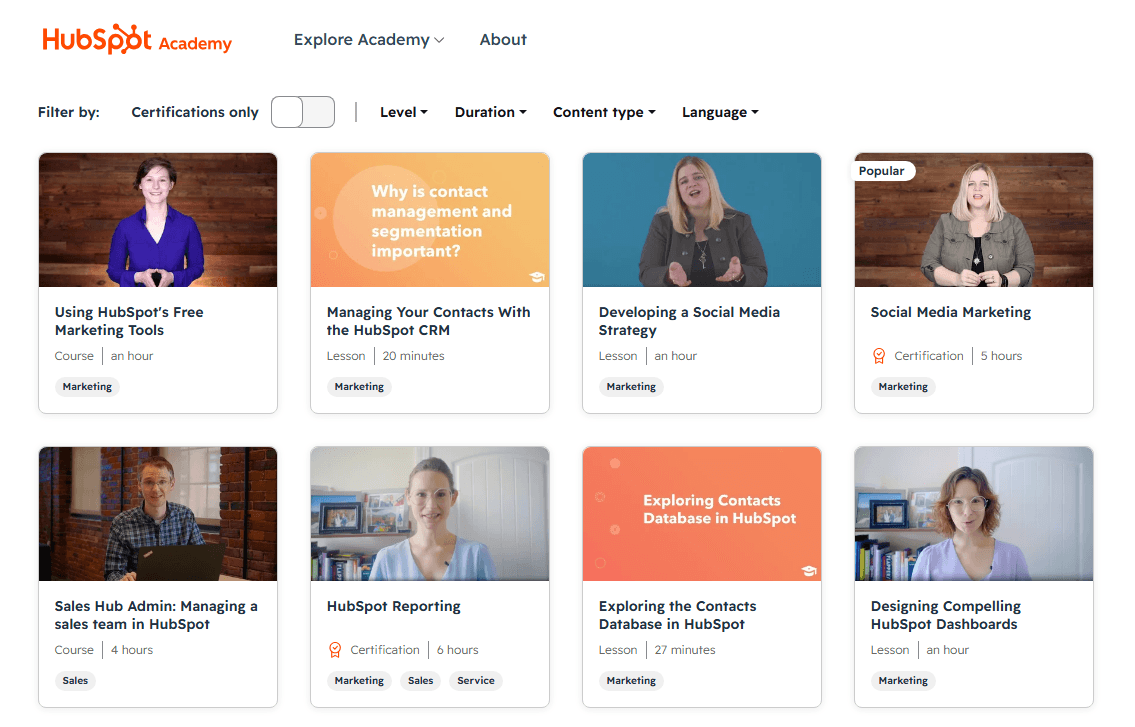
HubSpot Academy gives marketers free certifications they can use in their actual careers. The courses teach practical skills across inbound marketing, sales, customer service, social media, and content strategy, while making HubSpot’s methodology familiar long before someone evaluates the platform.
A marketer can complete a certification, add it to LinkedIn, apply the lessons at work, and gradually adopt HubSpot’s way of thinking about marketing. When that person later needs a marketing platform, HubSpot already has trust in the bank. Education becomes the path into the brand. Marketers gain useful skills, adopt the language, and begin seeing the company as a practical authority before software evaluation ever begins.
Salesforce Trailhead
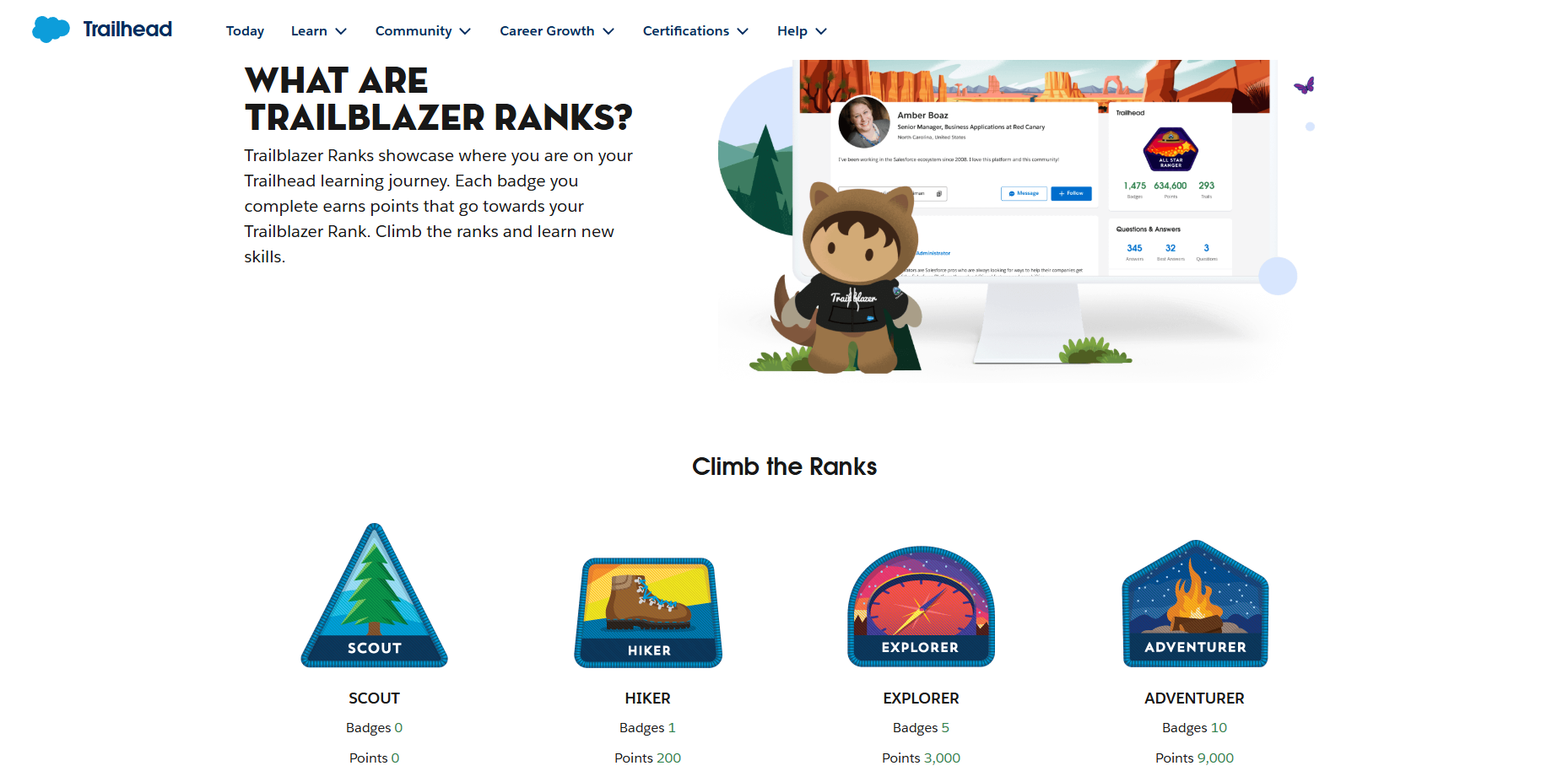
Salesforce Trailhead turns product education into professional development. Users learn Salesforce administration, development, implementation, and CRM strategy through guided modules, badges, points, and public profiles. The platform gives people a visible record of progress, which matters in a market where Salesforce skills can support real career mobility. Complexity is one of Salesforce’s biggest adoption challenges, and Trailhead helps solve it. A user can start with basic CRM concepts, move into admin training, earn badges, and become the person inside their company who understands how Salesforce should be configured and used.
Salesforce knowledge becomes portable. Users gain skills they can bring into performance reviews, job interviews, internal projects, and buying conversations, which gives the content value beyond the platform itself.
Product-Led Content That Enables Implementation

Product-led content becomes valuable when it makes the product feel usable before the buyer ever speaks to sales. In B2B, a buyer may understand the value proposition and still hesitate because implementation feels unclear. They want to know what the product looks like in practice, how it fits into their workflow, what effort it requires, and whether their team can realistically adopt it.
Documentation, templates, benchmarks, teardown reports, and implementation guides become powerful here. They reduce the risk of trying something new and give the buyer a way to test the thinking, borrow the workflow, or imagine the internal rollout before a sales conversation begins.
Stripe Documentation
Stripe’s documentation sets the standard for developer-focused content. Every API reference includes working code examples in multiple languages that developers can copy, test, and modify immediately. The guides walk through complete implementation scenarios, so teams can see how the platform behaves in real use, not just how individual functions work.
Developers evaluate tools by using them. If the documentation is confusing, adoption slows before the product gets a fair chance. Stripe removes that friction by making the first successful implementation easier. The documentation becomes part of the product experience because it helps users build momentum before they ever talk to sales.
Gong’s Revenue Intelligence Content
Gong publishes detailed breakdowns of what happens in sales conversations. Its “Reality of Sales” reports analyze recorded calls to surface patterns most sales teams miss: how top performers handle objections, which discovery questions correlate with closed deals, and how pricing conversations unfold when buyers push back.
Teams can turn those patterns into call review criteria, coaching conversations, and better sales habits. Gong’s platform feels more credible because the content proves the company understands revenue behavior at a practical level.
Notion Templates
Notion turns its user base into a content creation engine through templates. Users publish databases, workflows, and systems they have built, making them available for others to duplicate and adapt.
This solves one of the biggest adoption barriers in flexible software: the blank page. A new user does not have to imagine how Notion might fit into their work. They can start with a working content calendar, project tracker, hiring pipeline, or operating system built by someone who already solved the problem.
The template marketplace works as an adoption engine because each template shows the product in use and gives the next user a faster path to value.
Radical Transparency and Authenticity
In B2B, buyers are used to polished claims. Every company says it is customer-focused, data-driven, innovative, transparent, and trusted by leading teams. After a while, those words stop doing much work.
The content that cuts through usually shows something more specific. It lets the audience see how the company thinks, what it is willing to reveal, how it evaluates quality, or how it handles the messy parts of the work. This openness creates a different kind of trust because the audience is being given something they can judge for themselves.
Buffer’s Open Data
Buffer publishes real-time revenue, employee salaries, equity formulas, and fundraising details. That level of openness has become one of the clearest parts of the company’s identity.
Buffer’s content works because the openness has practical consequences. A customer does not have to guess whether the company is stable. A candidate can understand the culture before applying. Other founders and operators can study the decisions behind the business instead of relying on a polished company story. The transparency gives people more context than a normal brand page ever could.
Lavender’s Public Email Teardowns
Lavender publishes detailed teardowns of real cold emails, showing what works, what fails, and why. The analysis covers subject lines, structure, personalization, calls to action, and the subtle mistakes that make an email feel generic or forced.
Most sales advice stays vague. Lavender gets specific by tearing apart real cold emails and showing exactly what failed. A sales rep can see their own mistakes in the examples: weak personalization that feels robotic, subject lines that bury the hook, CTAs that ask for too much too early. They understand the fix and leave with a sharper eye for the next message they write.
Community-Driven B2B Content Marketing Strategies

Community-driven content builds trust through the experience of other users. In B2B, the question is rarely just, “Does this product work?” It is, “Will this work for a team like ours, with our workflows, constraints, and messy edge cases?” A strong community gives buyers a clearer view of the product in practice through peer examples, shared workflows, troubleshooting threads, and practical systems created outside the company’s marketing team.
Salesforce Trailblazer Community
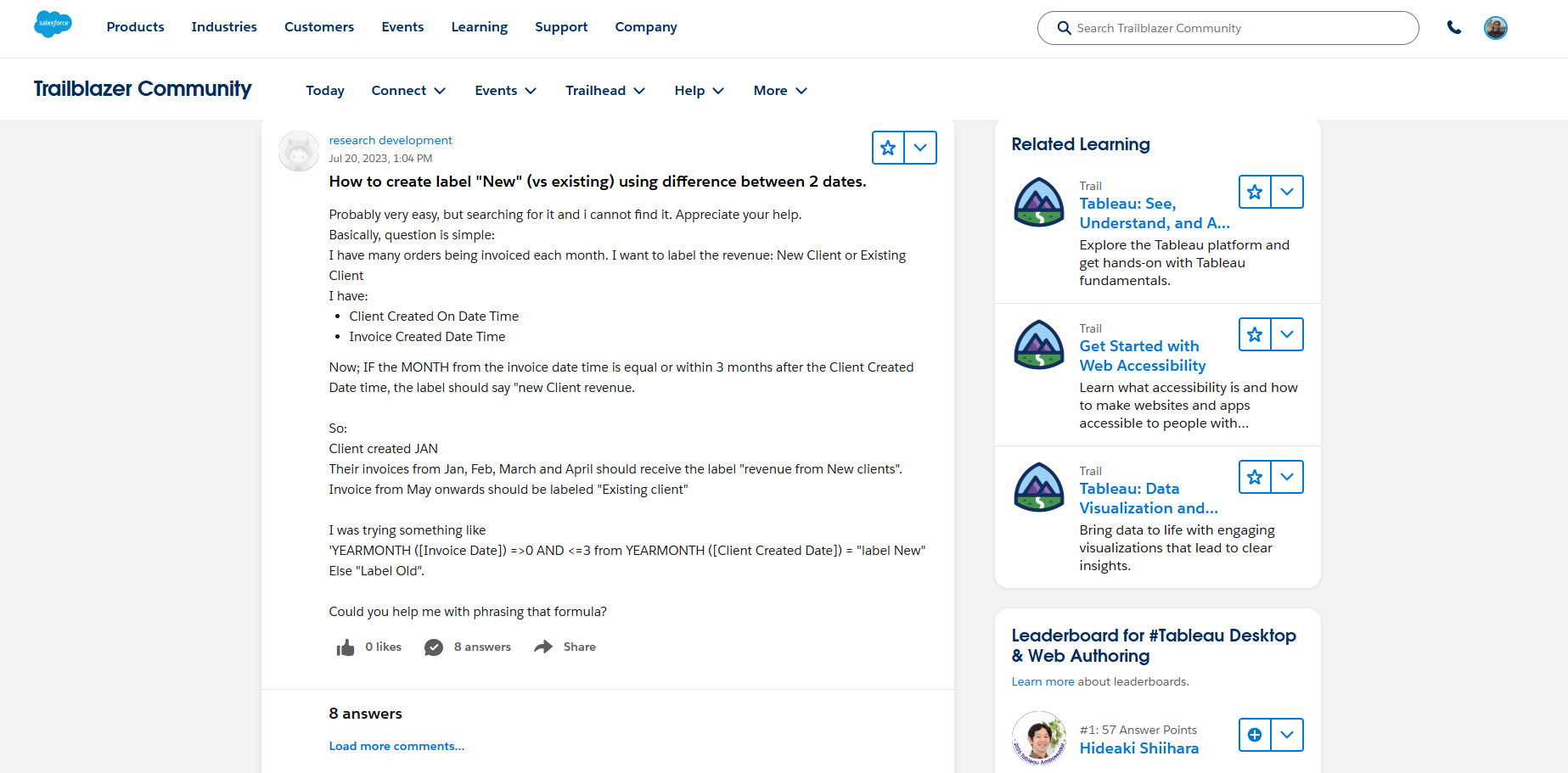
Salesforce built a large user community where admins, developers, consultants, and business users help each other solve implementation problems, share configuration advice, and build professional connections.
The strength of the Trailblazer Community is that it captures the kind of knowledge that rarely fits neatly into official documentation. A user trying to solve a specific workflow issue can often find advice from someone who has already dealt with a similar setup, team constraint, or integration problem. Every answered question becomes part of a growing library of practical knowledge.
That creates value for Salesforce beyond brand loyalty. The community makes the platform feel more usable because users are not learning alone. They have access to people who understand the product, the edge cases, and the reality of making it work inside a company.
Airtable Universe

Airtable Universe lets users publish their own bases, workflows, and systems for others to copy and adapt. A project manager can find a working content calendar, a startup can duplicate a recruiting tracker, and an operations lead can study how another team manages approvals or inventory.
That marketplace solves a real adoption problem. Flexibility creates hesitation. New users often understand the potential but struggle to know what to build first. Universe shows real systems built by real users, and each shared base acts like a working example of what the platform can become inside a team. The content feels credible because it comes from actual use, not a polished product demo, which helps users move faster while giving prospects a clearer picture of how it fits into everyday work.
Creative B2B Content Marketing: Acknowledge Human Emotions
B2B buyers are still people dealing with pressure, confusion, deadlines, internal politics, and tools that make their work harder than it needs to be. Many brands make the mistake of treating B2B content like emotion has no place in the room. The result is content that may be technically accurate, but is easy to forget.
Creativity has a place in B2B when it helps the audience recognize their own reality. A strong story, customer example, sharp observation, or well-placed joke can show that the brand understands what sits behind the job: systems break, approvals stall, handoffs fail, and teams get tired of repeating the same inefficient process.
Slack’s Customer Stories
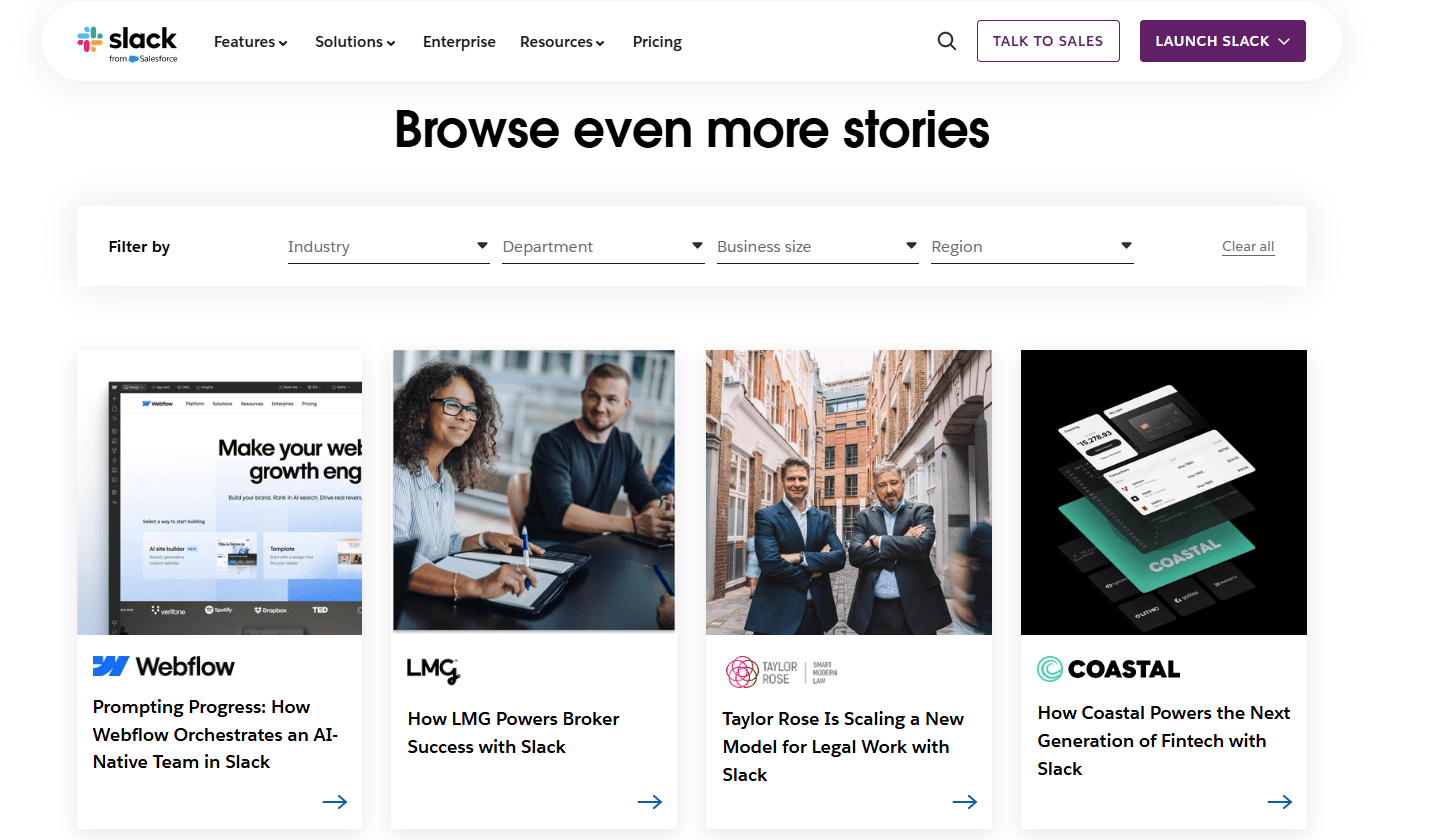
Slack publishes detailed customer stories that show how teams use the platform to solve workflow problems. The strongest stories do more than praise the product because they show the before state clearly: scattered communication, lost context, slow approvals, repeated questions, and teams wasting time trying to find information that should have been easy to access.
That operational detail is what makes the content believable. A reader can see how a customer success team uses channels, how automated handoffs reduce manual follow-up, or how a distributed team keeps decisions from getting buried. The story works because it connects the product to a real workday, not a polished testimonial. For more examples of effective B2B case studies, see this definitive guide to B2B content marketing.
Dialpad VoiceAI
Dialpad used comedy content to address real frustrations in sales and support workflows. The videos played with familiar problems: trying to take notes during a live call, digging through recordings for one important moment, missing context after a handoff, or trying to summarize a conversation after the fact.
That works because the humor comes from the audience’s actual day. Sales reps and support teams know those moments. They have lived the awkward pause, the forgotten detail, the messy call recap, and the “wait, what did the customer say?” problem. Dialpad’s content makes the pain recognizable before presenting the product as the solution.
Humor only works in B2B when it stays close to a real frustration. Dialpad made it work because the joke came from a problem the audience already understood.
Founder-Led Thought Leadership

Founder-led thought leadership gives the market a sharper way to see the category. B2B buyers hear the same safe language everywhere: growth, efficiency, smarter workflows, innovation. After a while, those words lose their meaning.
A founder can cut through that noise by speaking from real experience and saying something specific. They can challenge the assumptions others keep repeating, name the problems buyers already feel, and give the market clearer language for what is changing.
Founder-led content depends on judgment. The audience comes back when the founder helps them understand the category better than they did before.
Worth reading: For a deeper look at how executive voices build authority beyond one-off posts, read PR Thought Leadership and Executive Visibility.
Chris Walker’s LinkedIn Content, Refine Labs
Chris Walker built Refine Labs’ brand largely through LinkedIn thought leadership. His content challenged traditional demand generation playbooks, especially the overuse of gated content, lead forms, and attribution models that made marketing teams feel productive without always creating revenue.
The specificity made the content work. Walker was giving marketers language for problems they already sensed but struggled to explain internally. People followed the thinking first, then connected that thinking to Refine Labs.
Wynter’s Buyer Research Insights
Wynter publishes breakdowns of messaging tests, buyer research, and positioning feedback from real B2B audiences. The content shows which claims resonate, which ones fall flat, and where companies lose buyers because their messaging sounds too vague or too internally focused.
The value is in the exposure. Wynter shows the gap between what companies think they are saying and what buyers actually hear. That makes the content useful to product marketers, founders, and revenue teams who need sharper positioning, not another opinion about “better messaging.”
Intercom’s Published Books
Intercom uses long-form publishing to turn company thinking into something teams can actually use. Books like Intercom on Product Management give readers more than scattered advice. They organize Intercom’s philosophy around product, customer communication, and company building into a format that feels complete enough to reference.
Long-form thought leadership carries a different weight. A blog post can spark interest, but a book can become part of how a team trains people, debates strategy, or aligns around a shared way of working. Intercom’s books work because they make the company’s point of view durable. The ideas can travel from a reader’s desk into onboarding, planning meetings, product discussions, and internal playbooks.
Paddle’s SaaS Metrics Research

Paddle builds authority by giving SaaS leaders numbers they can use. Its research on pricing, retention, revenue performance, and growth benchmarks helps operators compare their own business against a broader market view.
SaaS teams are always trying to answer uncomfortable questions, which makes the content valuable. Is our churn too high? Are we pricing too low? Are we discounting too much? Are our revenue metrics strong enough for the next board meeting? Paddle’s research gives leaders a clearer baseline for those conversations.
The content becomes powerful because it enters real decision-making. When executives use a report to pressure-test pricing, explain retention, or frame performance to investors, the brand behind that research earns authority in a much deeper way than a standard awareness campaign could.
Original Research That Defines the Conversation

Original research becomes valuable when it gives other people the evidence they need to make their case. A marketing leader needs a benchmark for budget planning. A CIO needs a framework to defend a shortlist. A founder needs data to explain why a category is changing. Strong research gives them something solid to bring into the room.
The real value shows up when the research leaves your website and enters other people’s meetings. It gets cited, reused, debated, and built into presentations long after the launch campaign is over. The brand earns authority because its work becomes part of how the market explains decisions.
Content Marketing Institute Annual Research
The Content Marketing Institute publishes annual research that has become a reference point for content marketing planning. Marketing leaders use the findings to benchmark their teams, compare priorities, and understand how their peers are investing in content.
CMI’s strength is consistency. By returning to the same category year after year, the research shows how content marketing is changing over time, which makes it useful for budget planning, executive presentations, and internal strategy conversations. When marketers need to explain what is normal, what is changing, or what other teams are doing, CMI gives them something concrete to point to.
Gartner Magic Quadrant

Gartner’s Magic Quadrant has become one of the most recognizable evaluation frameworks in enterprise software. Buyers use it to understand a crowded market. Vendors use it to position themselves. Internal teams use it to narrow a long list of options into a smaller set worth serious evaluation.
The power of the framework is that it simplifies vendor comparison. A CIO or procurement team may be comparing 15 vendors across features, support, implementation risk, market presence, and long-term viability. Gartner turns that complexity into a structure people can discuss. The framework gives buyers a common language for comparison, which is why it shows up in shortlists, vendor conversations, and internal decision-making.
What This Means for Your B2B Content Marketing Strategy
The pattern across these examples is simple: strong B2B content gives the audience something they can use after they leave the page.
The format matters less than the job it performs. A certification, teardown, benchmark report, template, customer story, or community thread can all have value. What matters is whether the content helps someone learn, decide, explain, compare, or act.
That matters even more as AI increases the volume of content in every category. More companies can publish more often now, but volume does not create authority. Generic guides, recycled opinions, and surface-level explainers will become easier to ignore.
The opportunity is to build content with enough clarity and substance that people return to it. A piece someone saves, quotes, forwards, or brings into a meeting carries more value than another article written only to target a keyword.
For B2B brands, the better question is no longer, “What should we publish next?” It is, “What can we create that our market would miss if it disappeared?”
That usually means choosing a narrower focus than feels comfortable, going deeper than competitors are willing to go, and creating assets that prove expertise through usefulness. The goal is to become part of how the market understands the category.
Zen Media helps B2B brands build content that does more than fill a calendar. The right content explains the category, sharpens the company’s point of view, and gives buyers something useful enough to trust before they talk to sales. If you are ready to move beyond generic guides and build content that shapes how your market thinks about your category, contact us to discuss your content strategy.
FAQ
What makes B2B content marketing different from B2C?
B2B content marketing has to help people make a decision they usually cannot make alone. The buyer may like your company, but they still need to bring the idea to finance, operations, leadership, procurement, legal, or a technical team. Good B2B content gives those people the proof, language, and confidence they need to keep the decision moving.
How much should we invest in B2B content marketing?
The right investment depends on your market, deal size, sales cycle, and how much authority you already have. A company selling complex software or enterprise services usually needs more than a few blog posts. It needs content that supports search visibility, sales enablement, executive credibility, case studies, research, and buyer education. If the content cannot support revenue, reputation, or buyer confidence, the investment is probably going into volume instead of value.
Should we gate our best content behind forms?
Gate content only when the value is strong enough to justify the form. Generic guides usually work better ungated because buyers can find similar information elsewhere. Proprietary research, diagnostic tools, benchmarks, or detailed implementation frameworks can be gated if the exchange feels fair.
How do we measure B2B content marketing effectiveness?
Measure whether the content is creating movement, not just traffic. Rankings and pageviews matter, but they are not enough. Strong B2B content should show up in qualified pipelines, assisted conversions, sales conversations, target account engagement, branded searches, backlinks, citations, and closed-won journeys.
The best signal is often practical: sales keeps using it, buyers mention it, prospects forward it internally, and the same objections become easier to answer. If content helps a deal move with less friction, it is working.
What content formats work best for B2B audiences?
The format should match the buyer’s problem. If they need proof, use a case study. If they need comparison, use a framework. If they need implementation help, use documentation, templates, checklists, or technical walkthroughs. If they need confidence in the market, use original research.
A weak idea does not become strong because it is a video, report, or webinar. The format only works when the content gives the buyer something they can use.
How often should we publish new content?
Publish at the pace where quality does not collapse. For some teams, that means 1 serious article a month. For others, it means a weekly cadence supported by SMEs, research, and a real editorial process.
Frequency only matters when the content compounds. If each piece answers a real buyer question, supports sales, earns visibility, or sharpens your authority, keep going. If you are publishing just to stay active, slow down. Thin content trains the market to ignore you.
About the author: Sarah Evans is Partner and Head of PR at Zen Media, a global B2B PR and marketing agency. With 23+ years in communications, she architects PR strategy, drives earned media initiatives, and helps brands navigate AI-driven visibility. She is a regular contributor to Entrepreneur and has been recognized as a top writer on business and tech.