B2B AI visibility is your brand’s presence in the answers AI engines generate when buyers ask for vendor recommendations. It determines whether ChatGPT, Perplexity, Gemini, or Claude cite your company when a procurement lead asks “What are the top cybersecurity vendors for financial services?” or “Which B2B PR agencies specialize in tech?”
Right now, most brands with strong Google rankings are completely invisible to these engines. That gap is not a future problem. It is costing deals today.
According to Forrester’s Buyers’ Journey Survey, 89% of B2B buyers now use generative AI in at least one phase of their purchasing process. A separate analysis of 680 million citations found that 73% of B2B buyers actively use tools like ChatGPT and Perplexity during vendor research. For a growing segment of buyers, these engines are the first stop, before a website is ever opened or a contact form filled out.
TL;DR: 89% of B2B buyers use generative AI in their purchase process (Forrester, 2024), but most brands with strong Google rankings earn zero citations in ChatGPT, Perplexity, or Gemini. B2B AI visibility is built through three pillars: topical authority, technical optimization, and earned trust on AI-cited domains. This playbook explains how to build it in 90 days.

What B2B AI Visibility Actually Means
Google surfaces pages. AI engines synthesize and endorse. That distinction is the entire reason most B2B brands are invisible to the engines now mediating buyer decisions at the top of the funnel.
When a buyer searches Google, they get a list of ranked pages and choose which to visit. When a buyer prompts ChatGPT or Perplexity, they receive a synthesized answer that names specific brands, tools, and vendors. Your goal with AI visibility is not to appear in a ranked list. It is to be named in the answer itself.
The Difference Between Ranking and Being Cited
Ranking means your page appeared in a search results list. Being cited means an AI engine determined your brand was authoritative enough to name explicitly when synthesizing a recommendation. These are two different outcomes driven by two different sets of signals.
Research from Otterly.AI’s analysis of over one million data points shows approximately 80% of URLs cited by AI engines do not rank in Google’s top 100 for the same query. Google rank does not predict AI citation. The two require fundamentally different optimization strategies.
At Zen Media, we track brand presence in AI answers through a metric called Answer Share: the percentage of relevant AI-generated responses that include your brand as a named recommendation or citation.
Answer Share is the AI visibility metric that connects to pipeline because it measures presence at the exact moment buyers are forming vendor shortlists in conversational AI interfaces, not after they arrive on your website.
How Answer Engines Decide Which Brands to Cite
AI engines maintain their own authority graphs, built independently from Google’s. They evaluate sources based on structural formatting, cross-source consistency, entity clarity, and the credibility of the domains that already mention your brand.
The signals that drive AI citations are materially different from the signals that drive Google rankings. The table below captures where they diverge.
| Traditional SEO Signals | AI Visibility Signals |
|---|---|
| Backlink quantity and domain authority | Brand mentions on AI-trusted domains (Forbes, G2, TechRepublic, Capterra) |
| Keyword density and placement | Semantic coherence and comprehensive topical coverage |
| Page speed and Core Web Vitals | Structured data, schema markup, and semantic HTML hierarchy |
| Click-through rate and dwell time | Cross-source message consistency across multiple publications |
| Content freshness and recency signals | Regular publication cadence and entity-level topical depth |
| Featured snippet and rich result optimization | FAQ schema, entity markup, and passage-level citability |
One signal stands out above the rest. Analysis of AI citation patterns by Superlines found a 0.334 correlation between brand search volume and citation frequency, outperforming traditional domain authority metrics.
“Brand search volume, not backlink count, is the strongest predictor of AI citations, outperforming traditional domain authority metrics.”
Source: Superlines AI Search Statistics
Brands that have invested in awareness and recognition are better positioned for AI visibility than brands that have optimized purely for link acquisition.
Why Most B2B Brands Have an AI Visibility Gap
The typical B2B brand spent the last decade investing in Google SEO. That investment produced rankings, traffic, and leads through a well-understood playbook.
The problem is that playbook does not translate to AI citation. The same brands dominating Google page one are frequently absent from AI-generated vendor recommendations in their exact category.
- Content formatted for human readers scanning pages, not for AI engines synthesizing answers
- Earned media placed on domains AI citation systems do not actively reference
- Inconsistent brand messaging across sources that AI engines interpret as conflicting signals
All three are fixable without abandoning what you already know about content and PR. The next section explains how.
The Three Pillars of B2B AI Visibility

B2B AI visibility is not a single tactic. It is an integrated strategy built across three pillars. Strength in all three is required to earn and sustain citations. A gap in any one of them creates a ceiling on how often your brand gets named.
Pillar 1: Topical Authority
An authority hub for B2B AI visibility includes several interconnected pieces: a comprehensive pillar piece on the core topic, supporting pages addressing specific buyer questions, FAQ content written in the natural language buyers use with AI engines, comparison content positioning your solution against alternatives, and case studies written to outcome metrics.
These pieces connect through internal linking and consistent terminology, creating the knowledge graph that invites AI citation.
The content does not need to be long. It needs to be clear, structured, and consistent with what AI engines already cite about your category. Engines synthesize from multiple sources. Content that contradicts established consensus without strong evidence tends to be filtered out in favor of sources that confirm and extend what is already recognized.
Pillar 2: Technical Optimization
Schema markup is the connective tissue between your content and AI citation systems. FAQPage schema communicates that your content explicitly answers buyer questions. Entity markup establishes what your brand does, for whom, and in what category.
Without schema, AI engines must guess your content’s meaning from raw text, which introduces noise and reduces citation reliability. Adding schema to existing, well-structured content is often the highest-leverage technical action you can take for AI visibility.
Semantic heading hierarchy also matters more for AI than for Google. H1 through H3 structure creates the outline an LLM uses to parse and retrieve your content. Headings that read like document navigation give AI engines far less to work with than question-format headings that directly match buyer intent.
Pillar 3: Earned Trust on AI-Cited Domains
For AI visibility, the specific PR signal is whether AI engines already cite the domain where your brand appears. Forbes, TechRepublic, G2, Capterra, and Wired are cited by AI engines at high rates. One well-placed feature on a domain like these, with proper author attribution and consistent brand messaging, outperforms dozens of placements on low-authority directories that AI engines do not reference.
Cross-source consistency matters as much as placement volume. When your brand is described differently across three trusted publications, AI engines encounter conflicting signals and resolve them by hedging or omitting your brand from synthesized answers.
When your messaging is consistent, you create a coherent entity representation that AI systems can retrieve and cite with confidence. This is what we call the “Before Layer”: establishing brand presence in AI training and retrieval patterns before a buyer ever types a query.
Technical Requirements for AI-Readable Content
You do not need to rebuild your website to improve AI visibility. Most B2B brands can make meaningful improvements to existing content through schema additions, heading restructuring, and internal linking adjustments.
1. FAQPage Schema
Implement JSON-LD FAQPage schema on every content page that includes a question-and-answer section. Every Q&A pair in the article body should appear in the schema, not just the most prominent ones. This communicates to AI engines that your content is explicitly designed to answer buyer questions.
2. Entity Markup
Use Organization and Product schema to establish your brand’s identity, category, and relationships. This reduces ambiguity when an AI engine encounters your brand name in multiple contexts across different sources, strengthening consistent entity recognition across platforms.
3. Question-Format Headings
Every H2 and H3 should be interpretable as a standalone question or direct topic statement. Navigation-style headings (“Overview,” “Key Takeaways”) contribute nothing to AI passage retrieval. Rewriting headings as question-and-answer pairs significantly increases how often your content is surfaced in response to buyer queries.
4. Descriptive Internal Linking
AI engines build topic graphs from internal link structures. Links with generic anchor text (“click here,” “learn more”) contribute nothing to that graph. Links with descriptive anchor text communicate topic relationships and reinforce topical authority signals across your content cluster.
5. Crawlability Without Barriers
AI crawlers do not log in, bypass paywalls, or execute complex JavaScript interactions to access content. Content buried behind gated forms, lazy-loaded via JavaScript, or blocked by overly restrictive robots.txt rules will not be indexed by AI engines regardless of quality. Audit your most valuable content for these barriers and remove them.
Related: Answer Engine Optimization (AEO) in 2025: How to Win Traffic, Trust, and Revenue
How to Measure Your Brand’s AI Visibility
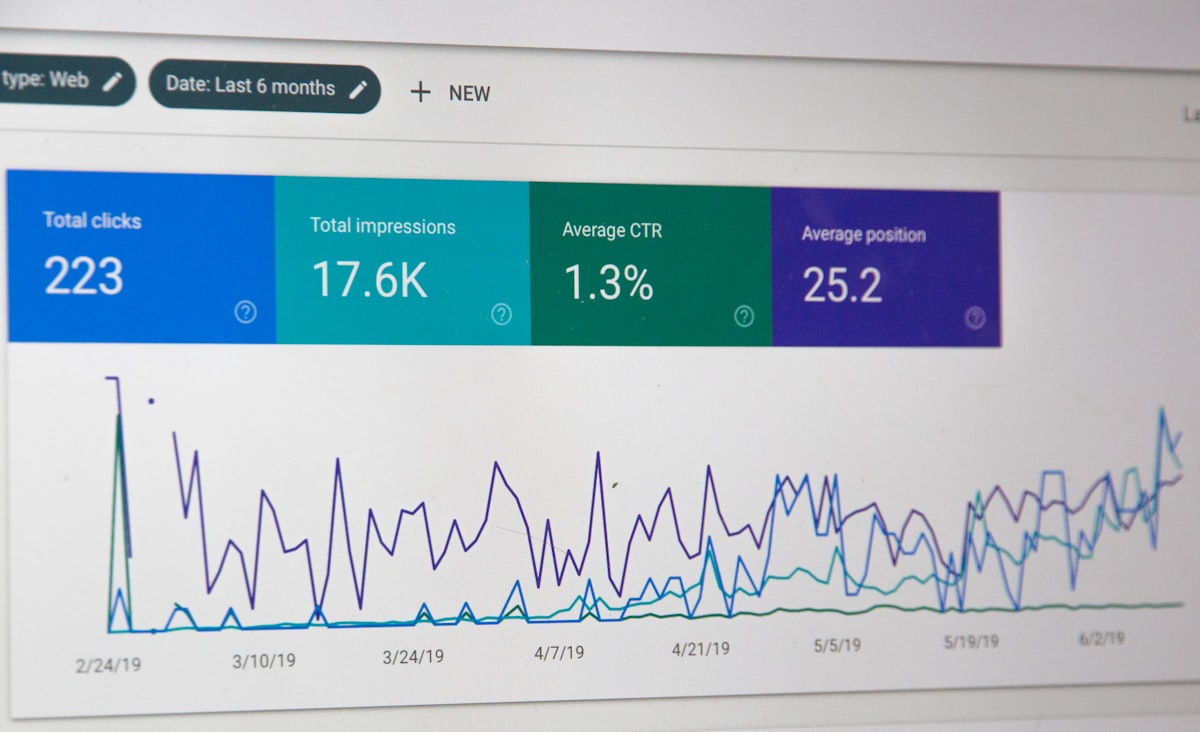
What gets measured gets managed. B2B AI visibility requires a distinct measurement framework from traditional SEO. Rank tracking tools do not capture AI citation data. You need a process built specifically for monitoring answer engine presence.
Build Your Query Set
Identify 25 to 50 buyer-intent queries your prospects are likely to use with AI engines: “What is the best [category] tool for [industry]?”, “How do I [solve your core use case]?”, “Which [category] vendors specialize in [buyer segment]?” This is buyer intent mapping for conversational interfaces, not keyword research for page optimization.
Run Weekly Citation Audits
Prompt ChatGPT, Perplexity, Gemini, and Copilot with each query. Record whether your brand is mentioned, in what position, in what context (primary recommendation, secondary mention, or footnote citation), and which competitor brands appear. This is your Answer Share baseline.
Track Source Attribution
When AI engines cite your brand, note which sources they attribute the information to. This tells you which content assets and earned media placements are actually driving citations, so you can invest in more of what is working.
Monitor Competitor Citation Rates
AI visibility is relative. If competitors are cited in 60% of relevant queries and your brand appears in 5%, the gap quantifies the opportunity. Competitor benchmarking turns visibility data into a strategic prioritization tool rather than just a vanity metric.
Segment AI Referral Traffic
Research from Position Digital shows AI search traffic converts at significantly higher rates than Google organic traffic, making AI referral sessions far more valuable per visit. Segmenting AI referral traffic in your analytics connects Answer Share directly to revenue impact.
Related: How to Create a Winning B2B SEO Campaign in 2025
Your 90-Day B2B AI Visibility Action Plan
Most B2B brands can establish meaningful AI visibility within 90 days by executing in the right sequence. The order matters: measurement before optimization, technical before content, owned before earned.
Find Out Where Your Brand Stands in AI-Generated Answers
Zen Media’s AI visibility audit delivers your Answer Share baseline across ChatGPT, Perplexity, Gemini, and Copilot, a competitor citation benchmark, and a prioritized action plan specific to your category and buyer queries.
Frequently Asked Questions: B2B AI Visibility
What is B2B AI visibility?
B2B AI visibility is the degree to which your brand is cited, referenced, or recommended by AI engines such as ChatGPT, Perplexity, Gemini, and Claude when buyers ask questions relevant to your category. Unlike traditional SEO, which measures rank position in search results, AI visibility measures Answer Share: the percentage of relevant AI-generated responses that mention or endorse your brand.
How is AI visibility different from traditional SEO?
Traditional SEO optimizes for rank position in Google’s blue-link results, based primarily on backlinks, keyword relevance, and technical page factors. AI visibility optimizes for citation frequency in synthesized AI answers, based on structured content formatting, topical authority, schema markup, and consistent brand presence across AI-trusted domains. Research from Otterly.AI shows approximately 80% of URLs cited by AI engines do not rank in Google’s top 100 for the same query, confirming that the two disciplines require distinct strategies.
Which AI platforms should B2B brands optimize for?
The four platforms that matter most for B2B AI visibility are ChatGPT, Perplexity, Google Gemini (including AI Overviews), and Microsoft Copilot. Each has distinct citation patterns and source preferences. Only 11% of domains are cited by both ChatGPT and Perplexity, which means optimization for one platform does not automatically translate to citations on another. Establish a baseline citation rate across all four platforms before prioritizing any single one.
What type of content gets cited by AI engines?
AI engines cite content that is structured, semantically coherent, and consistent with what trusted publications already say about the same topic. This means clear heading hierarchies, FAQ sections with direct answers to buyer questions, schema markup communicating entity relationships, and consistent messaging across multiple authoritative sources. Content that ranks well on Google is not automatically citeable by AI engines.
How do I measure my brand’s AI visibility?
Measure AI visibility by prompting ChatGPT, Perplexity, Gemini, and Copilot with 25 to 50 buyer-intent queries and recording how often your brand appears, in what context, and in what position. Track citation frequency per platform, source type (owned vs. third-party), placement context (primary recommendation vs. secondary mention), and competitor citation rates for the same queries. This gives you your Answer Share baseline.
How long does it take to build B2B AI visibility?
Meaningful B2B AI visibility typically takes 60 to 120 days from the start of a structured program. Brands with existing topical authority and structured content can see citation improvements in 45 to 60 days after technical optimization and targeted earned media placements. Brands starting from zero typically see initial citations within 90 days and consistent citation patterns by day 120.
Does traditional SEO still matter if I am investing in AI visibility?
Yes. Traditional SEO and AI visibility are complementary, not competing. Google still drives the majority of B2B organic traffic, and Google’s AI Overviews draw from many of the same authority signals as traditional rankings. The most effective B2B marketing programs maintain a traditional SEO foundation alongside a dedicated AI visibility strategy rather than treating the two as competing priorities.
About the author: Sarah Evans is Partner and Head of PR at Zen Media, a global B2B PR and marketing agency. With 23+ years in communications, she architects PR strategy, drives earned media initiatives, and helps brands navigate AI-driven visibility. She is a regular contributor to Entrepreneur and has been recognized as a top writer on business and tech.