TL;DR: In a crisis, companies are forced to choose what matters more in the moment: protecting themselves or telling people the truth. The examples below show what happens when that choice is made under pressure, sometimes correctly, sometimes too late.
Crisis can happen in any industry, to any organization, on any ordinary day. What separates a contained problem from a reputational collapse is rarely the crisis itself. It is the first instinct after it becomes public.
Before the statement is written, people are already deciding what the company is trying to hide, what it is willing to admit, and who it is trying to protect. Customers, employees, reporters, partners, and investors read that silence in different ways, but none of them ignore it. By the time the first response goes out, the story has already started forming.
That is why the statement is rarely the real test. The real test is the decision behind it.
The organizations in this piece faced different kinds of crises: poisoned products, grounded flights, burning phones, contaminated food, collapsed systems, and broken trust. Their responses were not equally clean. A few moved before the facts were comfortable. Others waited too long and had to recover from their own first statement. The strongest ones understood that credibility is not created by language alone. It comes from what the company is willing to admit, absorb, and change while everyone is watching. The examples below follow those decisions, not as clean PR lessons, but as moments where the response revealed the company behind the message.

1. Johnson & Johnson / Tylenol (1982)
In September 1982, seven people in the Chicago area died after taking Tylenol capsules laced with cyanide. Johnson & Johnson had no involvement in the tampering, but CEO James Burke ordered a nationwide recall of approximately 31 million bottles before investigators had established the full scope of the contamination. The company worked directly with federal authorities, halted all advertising, and kept public communication active throughout the investigation (PBS NewsHour, 2022). Tylenol remains the origin example of modern crisis communication because it established what every response since has been measured against: act before the full picture is comfortable, and make the cost of responsibility visible.
The recall cost an estimated $100 million. Tylenol had held 37% of the over-the-counter pain reliever market before the crisis. Within six months of the product’s relaunch in tamper-resistant packaging, it had recovered to 30% of the market (Wharton, 2012). Burke’s decision answered the audience’s core question before they had to ask it: when a company has to choose between its financials and the consumer, which one comes first?
The answer J&J gave was visible and costly. That is what made it credible.
2. Intel and the Pentium Floating-Point Bug (1994)
Intel’s initial response to the Pentium floating-point bug was a failure. What earns the episode its place here is what happened when they reversed course: a recovery that established a benchmark still referenced today.
When mathematician Thomas Nicely discovered that Intel’s Pentium processor produced rounding errors in certain floating-point calculations and reported the issue publicly, Intel argued the flaw would affect only a narrow subset of users and declined to offer unconditional replacements. That response drew more sustained backlash than the original defect had. IBM halted shipments of Pentium-based computers. The story moved from technical forums to mainstream business press. Within six weeks, Intel reversed course entirely and offered to replace any Pentium chip on request, no conditions attached. The final cost exceeded $475 million (Tom’s Hardware, 2024).
CEO Andy Grove later wrote about the episode in “Only the Paranoid Survive,” acknowledging that Intel had evaluated the problem as engineers rather than as a company with a relationship to its customers. When the reversal came, the replacement offer was unconditional. No eligibility criteria, no requirement that users demonstrate the flaw affected their specific work. The news cycle ended when the conditions did. Intel’s reversal shows that post-crisis reputation restoration often starts with unconditional commitments, not conditional ones.
3. Southwest Airlines Meltdown (2022)
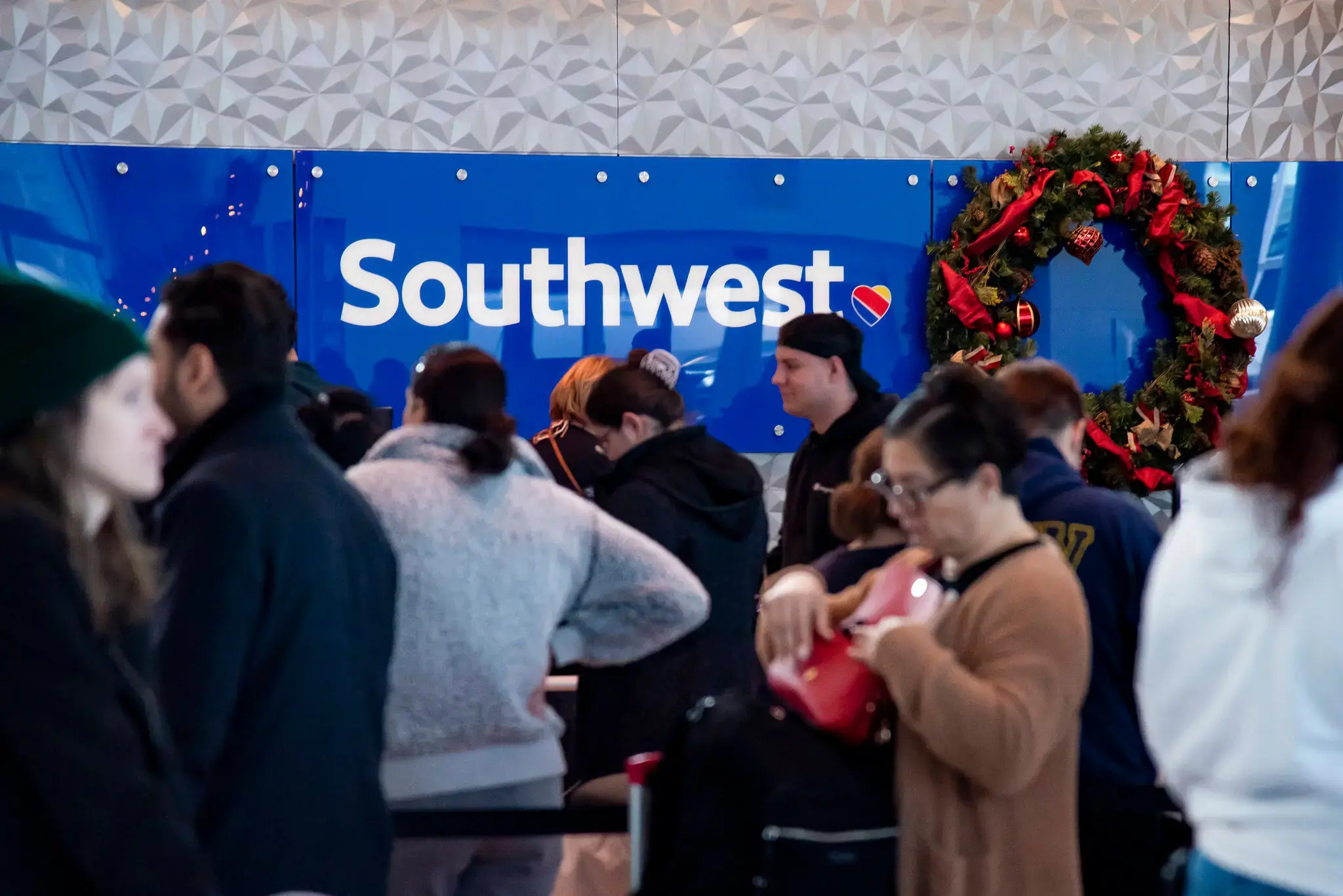
In December 2022, a winter storm triggered a cascading operational failure at Southwest Airlines. While other carriers recovered within days, Southwest’s crew scheduling system collapsed, stranding hundreds of thousands of passengers across the holiday week and forcing the airline to cancel more than 16,700 flights over 10 days (CNN, 2022).
Southwest’s initial response was a generic apology that blamed weather. That framing collapsed within 48 hours as travelers posted evidence of empty planes sitting at gates while crew members could not be located by the airline’s own systems. CEO Bob Jordan eventually issued a more direct acknowledgment, but the delay between the failure and the honest response extended the damage. When a crisis is visible to everyone affected and the first explanation does not match what they are seeing, the gap between those two things becomes the story.
4. Boeing 737 MAX (2019–2020)
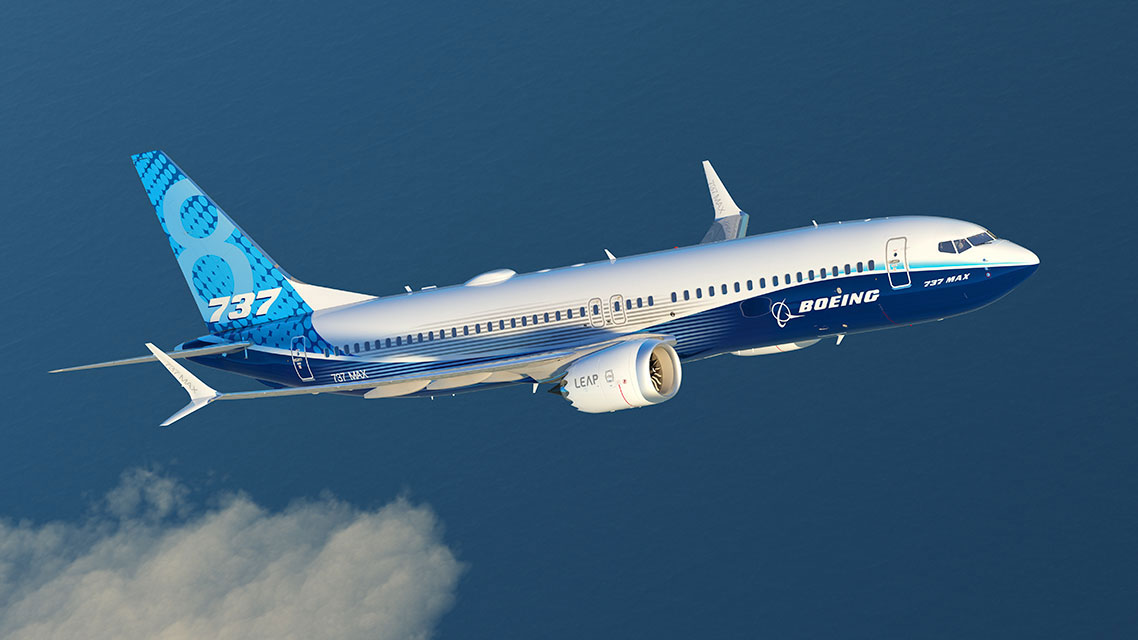
After two fatal crashes killed 346 people, Boeing’s initial communications focused on pilot error and procedural failures rather than design flaws in the aircraft’s MCAS system. The message was filtered through legal and regulatory constraints, and it sounded like it. Families of crash victims, regulators, and the aviation press all pointed to the same gap: Boeing was managing liability exposure, not communicating honestly about what had gone wrong (The New York Times, 2019). At this scale, media relations cannot be reactive. Reporters need direct engagement before the narrative forms.
CEO Dennis Muilenburg eventually acknowledged design issues, but the delay between the crashes and that acknowledgment meant the response arrived after trust had already eroded. When legal strategy dictates every word in a crisis response, the message stops sounding like it comes from people. Boeing’s communications became a case study in what happens when protecting the organization takes priority over transparency with the people affected.
5. Samsung Galaxy Note 7 (2016)
Samsung’s Galaxy Note 7 began catching fire due to a battery defect shortly after its release. Samsung’s first response was a voluntary recall and replacement program. Replacement units caught fire too. Samsung discontinued the Note 7 entirely, issuing a full refund and exchange program across all markets. The total cost exceeded $5.3 billion (CBC News, 2016).
The decision is regularly cited alongside J&J as an example of a brand choosing resolution over financial optimization when those two objectives conflict. Samsung’s market position took real short-term damage. The Galaxy S8, released seven months after the Note 7 discontinuation, saw stronger consumer demand than analysts had projected. When the replacement program failed, Samsung escalated the response rather than defending it. Acknowledging that a first attempt at resolution has failed, while financial and reputational stakes are both high, is harder in practice than it sounds.
6. Domino’s and the YouTube Response (2009)
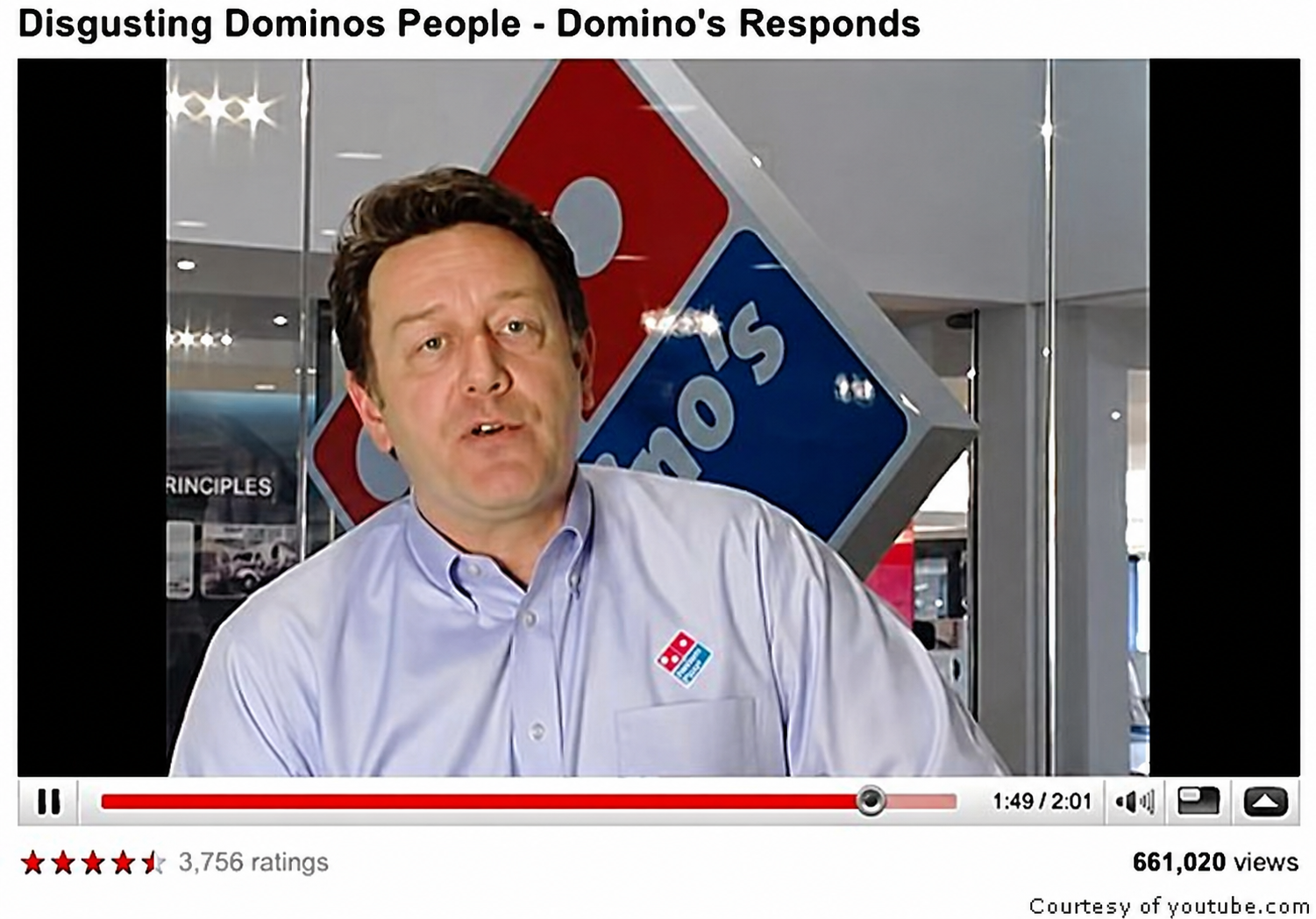
In 2009, two Domino’s employees posted a video showing themselves contaminating food during preparation. The video spread rapidly through social media before Domino’s had a formal response in place. CEO Patrick Doyle eventually recorded a YouTube video directly addressing the incident. That kind of response does not happen by accident. It requires media training that prepares executives to speak clearly under pressure.
The format choice mattered as much as the content. Domino’s had been attacked through YouTube, and Doyle responded through YouTube. He did not read from a prepared statement, and he did not soften the language. He addressed what had happened directly and expressed genuine anger about it. In 2009, this was still an unusual choice for an enterprise brand, and it set an early precedent: when a crisis lives on a specific platform, the response belongs there too.
7. Toyota Unintended Acceleration Recall (2009–2010)
Reports of sudden unintended acceleration in Toyota vehicles led to multiple crashes and deaths. Toyota’s initial response emphasized driver error and minimized the design flaws. That position became untenable as evidence mounted and regulatory pressure increased. Within months, Toyota recalled more than 8 million vehicles globally, halted sales of affected models, and CEO Akio Toyoda testified before the U.S. Congress (CNN, 2010).
The congressional testimony was the pivot point. Toyoda apologized directly, took personal responsibility, and committed to fundamental changes in Toyota’s quality oversight process. The initial defensive posture had already damaged trust. The public testimony, the halted sales, and the scale of the recall did what earlier statements had failed to do. When safety is involved, speed and humility matter more than protecting the brand.
8. KFC UK and the “FCK” Ad (2018)
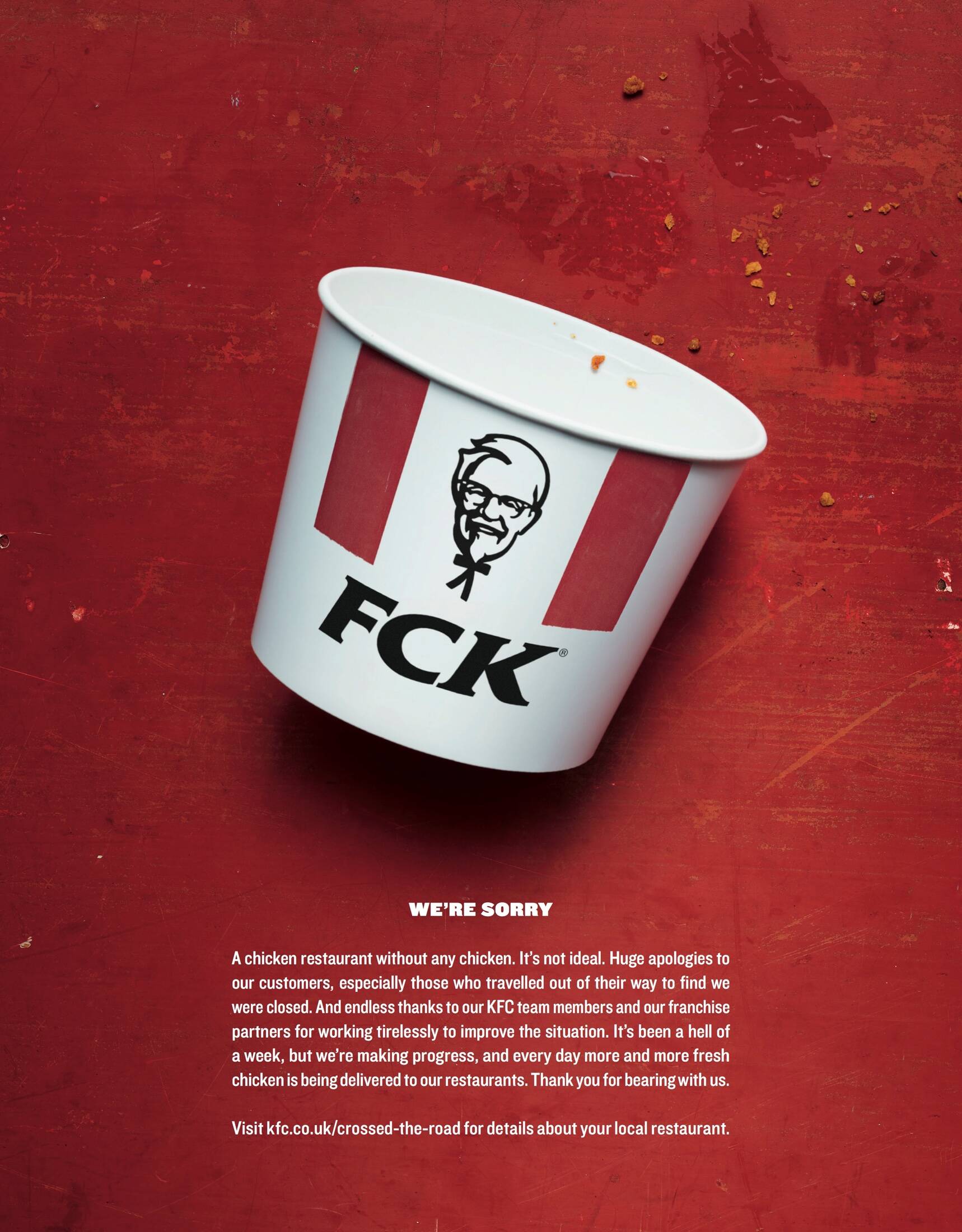
When KFC UK ran out of chicken due to a logistics failure with its new delivery partner, the brand ran a full-page newspaper advertisement featuring a KFC bucket with the letters rearranged to read “FCK,” followed by a message that acknowledged the situation directly and with clear self-deprecation. The ad skipped the elements most corporate communications teams reflexively include: no supplier named, no list of corrective actions, no language borrowed from a crisis template. It acknowledged what happened, expressed genuine embarrassment, and communicated that the brand understood why it was embarrassing.
It worked because the tone matched the situation. A chicken shortage at a fast-food chain is an operational embarrassment, and KFC treated it as exactly that. They skipped the formal crisis language and wrote something that sounded like people who understood why it was embarrassing.
9. Airbnb During COVID-19 (2020)
When COVID-19 travel restrictions effectively ended Airbnb’s core business in March 2020, CEO Brian Chesky sent a sequence of communications to hosts, guests, and employees (Airbnb, 2020). The sequence included a detailed account of the business situation, an announcement that Chesky and senior leadership would forgo their salaries, a description of what the company would and would not be able to do for hosts whose income had disappeared, and a letter to employees about layoffs that was shared widely outside the company.
Chesky’s approach maintained one discipline throughout: no stakeholder group first learned about decisions affecting them through press reporting. His letter to employees about the layoffs treated the people being let go as deserving a full account of why the decision was made, what the company would do to support them, and what he personally felt about it. Transparency in a sustained crisis requires ongoing communication across every affected group. Each audience gets a direct account of their specific situation. This multi-audience approach reflects the core challenge of stakeholder communication in crisis: every group needs to hear the same truth, tailored to their concerns.
10. CrowdStrike (2024)
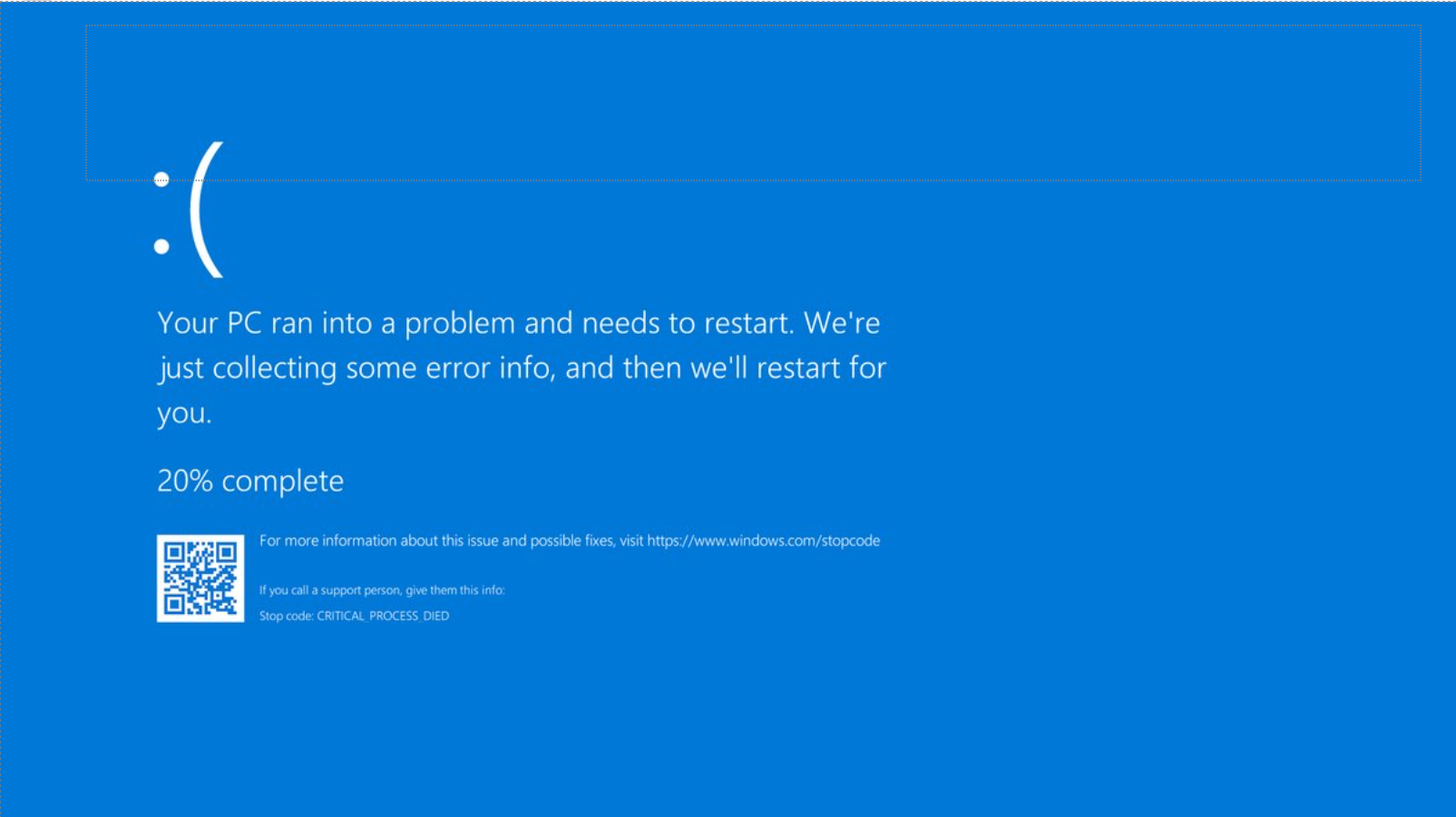
In July 2024, a faulty CrowdStrike software update caused approximately 8.5 million Windows systems to crash simultaneously, affecting hospitals, airlines, financial institutions, and government agencies across multiple countries (The Verge, 2024). CrowdStrike acknowledged the issue within hours and published a detailed root cause analysis that was specific about the technical failure, how it propagated, and what would prevent recurrence (CrowdStrike, 2024). CEO George Kurtz issued a public statement acknowledging the scope of the failure.
The response was not universally praised. A $10 Uber Eats voucher offered to affected enterprise customers drew criticism and was eventually rescinded. The core communications decision, though, was right: publishing a detailed technical explanation of what went wrong rather than a general acknowledgment of “an issue.” Enterprise security buyers need to understand root causes to make their own assessments. A vague apology from a security company would have been more damaging than a specific one. CrowdStrike published the specifics, and that is what the audience needed. In B2B tech, technical transparency builds trust in a way generic apologies never will.
What Separated Responses That Worked From Those That Made Things Worse
In every case, the audience was asking a simple question: are they trying to protect themselves, or are they trying to tell me the truth? The companies that recovered answered that question early. The ones that struggled tried to manage it.
Most crisis communications frameworks start with “what should we say.” Who is affected, and what are they already assuming about us right now? The organizations above answered that question before it hardened into permanent judgment. Building that response capability before a crisis breaks requires a structured approach to crisis communication planning.
The gap between a crisis breaking and your first response is when trust gets decided. If you are building a crisis communications framework before you need it, or if you are working through how your organization would handle a situation like the ones above, our crisis communication and reputation management practice helps organizations prepare for that moment. We work with teams to build the infrastructure, approval chains, and response protocols that need to exist before a crisis breaks. Talk to our team to start that conversation.
Related Articles
About the author: Sarah Evans is Partner and Head of PR at Zen Media, a global B2B PR and marketing agency. With 23+ years in communications, she architects PR strategy, drives earned media initiatives, and helps brands navigate AI-driven visibility. She is a regular contributor to Entrepreneur and has been recognized as a top writer on business and tech.