
Public relations in 2025 is not the same discipline it was three years ago. The channels have multiplied, audiences are harder to reach, and the expectations placed on PR teams now extend well beyond press releases and media lists. Brands that are winning have expanded their definition of PR to include executive visibility, influencer strategy, short-form video, and authentic content that builds trust before a journalist or buyer is ever in the room.
The nine trends below reflect where that shift is landing. Some are acceleration of patterns already in motion. Others represent genuine changes in how audiences consume and act on brand communication. Together, they define what a modern B2B PR strategy looks like going into the second half of this decade.
TL;DR: PR in 2025 is a full-channel discipline. The nine trends reshaping it: PR and marketing workflows are merging, cultural relevance is now a baseline requirement, executive personal branding is a primary visibility channel, transparent communication builds media trust, B2B influencer marketing is capturing real budget, PR now extends to every stakeholder touchpoint, short-form video drives discovery (47% of marketers say it’s the best product education format), authentic content outperforms polished imagery, and strong PR directly accelerates talent acquisition.
1. PR and Marketing Will Become Further Entwined
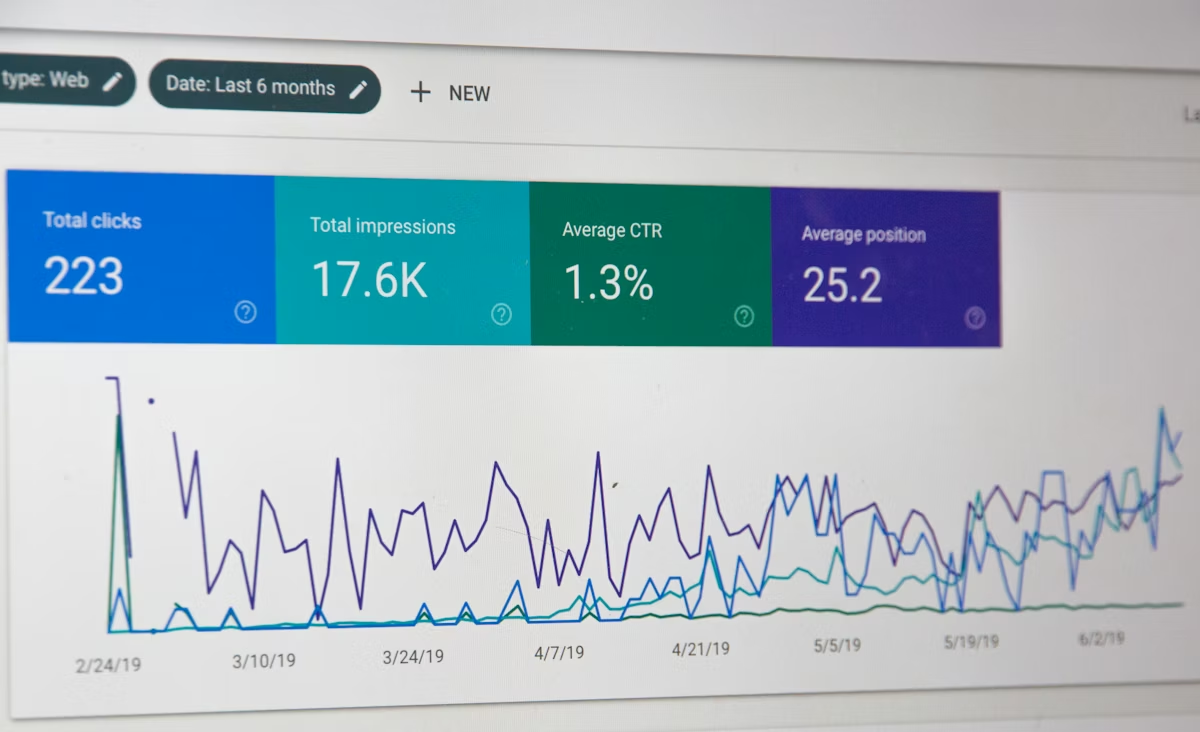
The firewall between PR and digital marketing is coming down. A press feature in a major publication is a starting point, not a finish line. PR professionals who earned that coverage now need to know how to amplify it across social channels, build backlinks from it, and repurpose it into formats that keep working after the initial coverage fades. That requires cross-departmental fluency that didn’t exist in traditional PR structures.
This convergence is not about eliminating the distinction between earned and paid media. It’s about recognizing that a press win without an amplification plan leaves most of its value unrealized. Modern PR strategy accounts for what happens after coverage lands, not just how to earn it.
In practice, this means PR professionals need working familiarity with SEO, paid social, and content strategy. Not deep expertise in each, but enough fluency to brief a digital team, review a distribution plan, and connect earned media moments to owned and paid amplification. The organizations building this fluency are pulling ahead of those that treat PR and marketing as separate functions with separate KPIs.
2. PR Content Must Be Culturally Relevant

Relevance in 2025 is not the same as visibility. A brand can be highly visible and still be irrelevant to the audiences it’s trying to reach. Cultural relevance means understanding what your target audience cares about right now, and communicating through that lens rather than defaulting to brand-first messaging.
The stakes for getting this wrong are concrete. A February 2025 study in The Guardian found that consumers are increasingly directing their spending toward companies that align with their values. Tone-deaf campaigns don’t just underperform; they generate backlash that requires active crisis communications management to contain. The cost of a relevance failure is not a missed KPI; it’s reputational repair.
Cultural relevance requires ongoing listening, not a quarterly trend report. PR teams that build social listening into their workflow, monitor audience sentiment in real time, and maintain editorial flexibility to respond when cultural moments open windows consistently outperform those operating on fixed content calendars. Being relevant means being willing to change your message when the context changes.
The harder discipline here is restraint. Not every cultural moment is an opening for your brand. Forcing relevance when there is no authentic connection reads as opportunistic and often backfires. The question is not “can we comment on this?” It’s “do we have something honest to add?”
Related: The Case for Crisis Communication as a Tool for Reputation Management
3. Personal Branding Will Become a PR Strategy

The audiences that drive B2B purchasing decisions don’t follow company pages; they follow people. Executive personal branding is no longer a side project for executives with spare time. It’s a primary PR channel. A CEO or VP with a genuine, consistent presence on LinkedIn reaches buyers, partners, and journalists in ways that a branded corporate account rarely does.
This doesn’t mean every executive needs to become a content creator. It means companies need to invest in helping leaders develop their brand through a combination of ghostwriting, media coaching, and strategic positioning. Executives who build an audience online become credibility signals for the brand they represent. That credibility carries weight in media pitches, partnership conversations, and sales cycles where buyers are researching before they ever reach out.
LinkedIn is the dominant platform for B2B executive visibility in 2025, but it’s not the only channel that matters. Industry podcasts, conference keynotes, and trade media profiles all contribute to an executive’s public footprint. The goal is consistent presence across the channels where your buyers pay attention, not volume for its own sake.
4. Transparent Branding Becomes Crucial in Public Relations

Customers want to understand what drives a brand, not just what it sells. PR strategy in 2025 is less about broadcasting announcements and more about building an accurate, consistent portrait of the company across every channel where audiences encounter it. When what a brand says in a press release contradicts what it posts on social media or how it responds to a crisis, trust erodes and reputation suffers.
Transparent branding requires message consistency at the organizational level. Marketing, PR, executive communications, and customer-facing teams all need to be drawing from the same source of truth about what the company stands for and how it communicates. Inconsistency signals internal misalignment, and audiences notice it faster than most leadership teams expect.
Practically, transparency also means owning mistakes publicly and quickly. Brands that acknowledge errors with specificity and outline concrete corrective actions recover faster than those that issue vague non-apologies or go silent. Journalists remember how companies behave in difficult moments. So do customers.
5. More Marketing Dollars Will Go to Sponsored Content and B2B Influencer Marketing

B2B influencer marketing has moved from experimental to mainstream. Where B2C influencer partnerships have been standard for years, B2B organizations have been slower to commit real budget. In 2025, that’s changing. Industry analysts, niche community builders, and subject-matter experts with engaged LinkedIn or podcast audiences are now receiving the same strategic attention that media outlets once held exclusively.
The mechanism is straightforward: customers make purchasing decisions based on word-of-mouth practices, and in B2B, that word-of-mouth increasingly happens through trusted voices in professional communities rather than through advertising or press coverage. Research from Sprout Social (2024) confirms that influencers significantly drive purchasing decisions across audiences, including in professional markets.
Sponsored content follows a similar logic. Advertorials and native placements in trusted trade publications reach buyers who have actively opted into that content environment. When executed well, sponsored content in the right outlet can perform comparably to earned coverage, particularly for categories where the audience has high trust in the publication.
The key variable for both influencer partnerships and sponsored content is specificity. A macro-influencer with 500,000 generic followers in your industry will rarely outperform a subject-matter expert with 15,000 highly targeted ones. Targeting the right niche with the right voice matters more than reach.
6. Successful PR Is More Than Media Relations

Media relations is a component of PR, not the whole of it. Relying exclusively on press placements to build brand awareness ignores the full range of stakeholder touchpoints where audiences form opinions about a company. Buyers, partners, investors, employees, and the media itself all encounter a brand through different channels, and each channel requires a distinct communication strategy.
The modern approach treats earned media as one channel within a broader stakeholder communications program. That program includes social media campaigns, industry podcasts, virtual summits and roadshows, LinkedIn Live sessions, thought leadership content, and digital experiences that reach audiences directly without depending on editorial coverage.
This shift also changes the metrics. A PR program measured only on press placements will undercount its actual impact on brand awareness, web traffic, and pipeline. Building an attribution model that captures earned media alongside other PR touchpoints gives leadership a more accurate picture of what PR actually delivers and makes it easier to justify investment.
7. Short-Form Video Content Will Become More Important for Building Buzz

Short-form video has become the dominant discovery format for brand content. The audiences PR teams are trying to reach are spending their attention on TikTok, Instagram Reels, and YouTube Shorts, not on long-form explainers or static blog posts. Meeting them in that environment requires a content strategy that produces short, platform-native video as a default output, not an afterthought.
The distribution play here is repurposing. A press feature in a trade publication can become a 45-second explainer on TikTok. An executive podcast appearance can become a series of LinkedIn video clips. A product announcement can be packaged as a Reel before the full-length article ever publishes. Tools like CapCut and Splice make it possible to produce this content without a full production budget.
The brands that are building virality through short-form video are not producing polished corporate videos. They’re producing content that feels native to each platform, answers a specific question or emotion quickly, and gives viewers something worth sharing. That last requirement is not about entertainment value. It’s about whether the content makes the viewer look informed or insightful for passing it on.
Related: The Ultimate Guide to Social Media Platforms for B2B Influencer Marketing
8. Unfiltered PR Content Is In

The appetite for polished, over-produced brand content is declining. Consumers in 2025 are more capable than ever of detecting staged authenticity, and the proliferation of AI-generated content has made genuine human communication more valuable by contrast. Brands that communicate with visible honesty, including showing imperfections, sharing real process, and addressing hard questions directly, are building stronger trust than those that present a perfectly curated image.
Unfiltered content is not the same as careless content. It’s deliberate communication that prioritizes honesty over polish. A founder sharing a real product failure and what the team learned from it is unfiltered. A company openly discussing why it made a controversial pricing decision is unfiltered. Behind-the-scenes content that shows actual people doing actual work is unfiltered. These formats build the kind of credibility that press coverage alone doesn’t convey.
This trend is also a response to the trust deficit created by AI. As audiences become less certain about what’s real online, they’re rewarding brands that give them concrete evidence of genuine human presence. The bar for building brand trust has risen, and authentic content is one of the most reliable ways to clear it.
Related: How to Write Incredibly Successful B2B Marketing Content
9. Talent Acquisition Will Be a Natural Outcome of PR

Top candidates research companies the same way buyers do: through media coverage, executive presence, industry reputation, and what current employees say. A company with visible thought leadership, consistent press coverage, and a clear point of view on its industry signals to job seekers that this is a place where real work is being done and recognized. That signal is increasingly decisive in competitive hiring markets.
The connection between PR and talent acquisition is most direct at the leadership level. When executives are visible in their field and when the company earns recognition in industry rankings, awards, and trade media, it builds the employer brand signals that bring in the best talent and support retention. People want to work at companies that are going somewhere, and external visibility is one of the most credible indicators of direction.
This means HR and PR teams benefit from tighter coordination. Employer brand messaging, company culture content, executive profiles, and award nominations all feed the same pipeline. When PR is treated as a cross-functional asset rather than a communications silo, its impact on talent acquisition becomes both visible and measurable.
Related: Zen Media’s Brand Positioning and Messaging Services
Frequently Asked Questions
What are the biggest PR trends in 2025?
The biggest shifts are the convergence of PR and digital marketing workflows, the rise of B2B influencer marketing as a budget priority, short-form video as a PR distribution channel, executive personal branding as a primary visibility tool, and the growing premium on authentic unfiltered content. Brands treating PR as a full-channel strategy are pulling ahead of those running traditional press-only programs.
How is AI changing public relations in 2025?
AI is accelerating content production while simultaneously raising audience skepticism. PR teams are using it for media monitoring, pitch personalization, and content repurposing at scale. At the same time, the flood of AI-generated content has increased the value audiences place on genuine human communication. The brands navigating this well are using AI operationally while investing more, not less, in authentic storytelling.
What is the difference between PR and marketing in 2025?
The line between PR and marketing has blurred. PR still focuses on earned media, reputation management, and stakeholder relationships, while marketing handles paid channels and demand generation. But the tactics now overlap: PR professionals manage social amplification, SEO backlinks, and content strategy alongside traditional pitching. The most effective teams run integrated PR-marketing programs rather than siloed functions.
How important is short-form video for PR in 2025?
It’s become a primary distribution channel, not a secondary one. With 47% of marketers citing short-form video as the most effective format for consumer product education (Influencer Marketing Hub), PR teams that don’t have a video repurposing strategy are leaving significant reach on the table. Every press win should have a short-form video component for social distribution.
What is B2B influencer marketing and how does it fit into PR?
B2B influencer marketing involves partnering with industry thought leaders, analysts, and subject matter experts who have earned trust with niche professional audiences. Unlike B2C influencer work, B2B influencer partnerships typically focus on LinkedIn, industry podcasts, and professional communities rather than consumer social platforms. Sprout Social’s 2024 research confirms influencers significantly drive purchasing decisions, including in B2B categories.
How does PR help with talent acquisition?
Strong PR builds the employer brand signals that candidates use to evaluate companies: thought leadership, executive visibility, industry recognition, and a clear company point of view. When a company earns consistent media coverage and maintains visible leadership in its space, it signals organizational momentum. That signal is one of the most credible factors in a candidate’s decision to pursue a role. Coordinating PR and HR around shared employer brand objectives makes both functions more effective.
2025 is the year to move PR from a press relations function to a full-channel communications program. If you’re ready to rethink how your brand earns attention, builds trust, and drives business outcomes through integrated PR and marketing, let’s chat.
About the author: Sarah Evans is Partner and Head of PR at Zen Media, a global B2B PR and marketing agency. With 23+ years in communications, she architects PR strategy, drives earned media initiatives, and helps brands navigate AI-driven visibility. She is a regular contributor to Entrepreneur and has been recognized as a top writer on business and tech.