Why ChatGPT Ads and AI Citation Now Matter
For years, digital visibility followed a familiar pattern. A user searched on Google, scanned a list of results, and clicked through to websites. Brands competed for rankings, traffic, and conversions inside that system.
AI assistants are changing that discovery flow. When someone asks ChatGPT about agencies, software, products, or strategy, the platform often returns a synthesized answer instead of a page of links. That answer may mention only a small number of brands or sources. In many cases, those mentions become the user’s shortlist.
At the same time, monetization is beginning to appear inside the same interface. That means brands can now be seen through more than one layer of visibility during a single interaction.
One layer is paid visibility through sponsored placements. Another is organic visibility through citations or brand mentions inside the AI-generated response. As product and shopping modules expand, a third layer is also starting to emerge in certain commercial queries.
Because these systems often surface only a limited set of references, presence in any of these layers can shape which companies users notice, compare, and remember.
Some of this discussion overlaps with Generative Engine Optimization, but the broader issue is simpler: how visibility works inside AI answers.
What Is Officially Confirmed About ChatGPT Ads
The public conversation around ChatGPT ads has moved faster than the confirmed facts. What has been reported so far points to a narrower rollout than many people assume.
Sponsored placements are separate from the answer
According to a WIRED report, OpenAI’s current ad model places sponsored content in clearly labeled boxes below the chatbot’s response, not inside the response itself. In the example described publicly, a user asking for travel help would still receive a standard ChatGPT answer first, then see a hotel ad underneath it.
Adthena’s review supports that interpretation, observing that OpenAI’s published ad examples make sponsored placements visually distinct from the conversational output, a design choice that appears intended to preserve trust by clearly separating paid placement from generated content.
The rollout is tiered, not platform-wide
The same reporting says ads are being shown to logged-in users on the free plan and on the $8-per-month Go tier, while Plus, Pro, and Enterprise users do not see them. That tells us OpenAI is not treating advertising as a universal layer across the entire product. At least for now, it is tied to lower-cost access tiers rather than the premium experience.
ALM Corp frames this as an ad-supported access model, with lower tiers carrying ads while higher-paying subscribers keep a cleaner interface. Whether that structure lasts is still unknown.
Sensitive categories are excluded
Another confirmed detail is that ads are not meant to appear in certain sensitive or regulated contexts. The same WIRED report says OpenAI does not plan to show ads in conversations involving topics such as health, mental health, or politics, and also does not plan to serve ads to users it believes are under 18.
OpenAI is drawing boundaries around where monetization can appear, at least in this early phase.
What the rollout confirms
So far, the public model is more restrained than many people expected. ChatGPT ads are real, but the confirmed structure is not “pay to appear inside the answer.” It is a separate sponsored layer, limited by subscription tier, clearly labeled, and blocked from certain sensitive contexts.
Early Monetization Structure: Pricing and Market Access
How ChatGPT ads appear is only part of the story. The early pricing signals and access model also reveal how cautiously the platform is approaching monetization.
Early pricing suggests a premium entry model
Initial industry analyses suggest that ChatGPT advertising is not being launched as a broad self-serve platform. Instead, it appears to be entering the market as a controlled, high-cost beta environment.
According to ALM Corp, early estimates place ChatGPT advertising at roughly $60 CPM, with minimum campaign commitments around $200,000 for early access. If those numbers hold, they position ChatGPT ads closer to premium sponsorship environments than to typical search or social media advertising. That pricing structure implies a limited early market, with the format likely being tested among a smaller group of higher-budget brands.
A similar interpretation appears in analysis from StubGroup, which describes the current system as a limited beta program rather than a fully open advertising network.
Inventory and measurement are still basic
Another signal of how early the system is comes from the measurement tools available to advertisers.
Analysis from Mission Driven Marketing suggests that advertisers currently receive basic performance signals such as impressions and clicks. More advanced measurement tools, such as detailed conversion attribution or audience segmentation, do not appear to be part of the initial rollout.
This limitation points to a bigger challenge with advertising inside conversational systems. Traditional platforms measure behavior through links, landing pages, and browsing sessions. ChatGPT works differently. The interaction feels more like an ongoing conversation than a trackable click path.
Put together, these signals suggest the monetization system is still in an early stage. Inventory appears limited, pricing reflects a premium testing environment, and measurement capabilities remain relatively simple compared with mature ad platforms.
AI Citation Behavior: What Current Analyses Suggest
Unlike ChatGPT ad placement, citation behavior is not directly documented by OpenAI in a detailed public framework. What follows comes from external analysis and observed patterns, not official ranking disclosures.
The Ad Firm’s GEO analysis highlights several early patterns in how AI systems surface sources and brands inside generated answers. These observations do not reveal the internal ranking logic of AI models, but they do offer clues about how visibility currently tends to appear.
Domain authority and source dominance
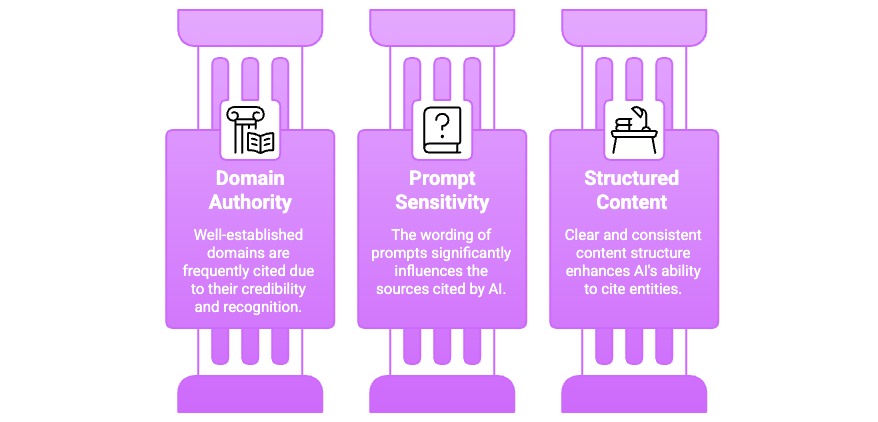
One pattern shows up again and again: well-established domains tend to appear more often in AI-generated citations. Large publishers, recognized platforms, and other authoritative sources surface across many of the same queries. It looks a lot like what we have seen in traditional search, where credibility, recognition, and long-built authority help determine which sources get referenced most often.
Prompt sensitivity and citation variability
Another observation is that the wording of a question can influence which sources appear. Even small wording changes can lead to different citations in the answer. More specific prompts usually pull in a broader mix of sources, while broader or more generic queries tend to lean on a smaller set of familiar, well-known domains.
Structured content and clear entities
Content structure also appears to matter. When companies, products, or concepts are defined clearly and consistently, AI systems seem more likely to reference them when generating answers. Pages that present information in a structured, easily identifiable way make it simpler for the model to recognize entities and summarize them within a response.
Ads, Answers, and Organic Visibility Are Still Separate
A key question for marketers is whether advertising inside ChatGPT affects what the model surfaces in its answers. Based on what is publicly visible today, the two appear to operate as separate layers.
Sponsored placements appear in designated ad blocks, while citations and brand mentions come from the model’s generated answer. A brand may appear as a paid placement, as an organic mention, or not at all. The system does not currently present ads and citations as a merged result.
This separation effectively creates two different visibility paths inside the same environment. One path is paid exposure through sponsored modules. The other is organic visibility through citations and brand mentions that the model includes when generating its response.
What remains unclear is how independent these layers are behind the scenes. There is no public documentation describing whether advertising signals influence retrieval systems, source selection, or ranking logic in any way. It is also unknown whether the current separation reflects deeper architectural boundaries or simply an interface design choice.
For now, the safest conclusion is also the narrowest one, and it is the only one public evidence clearly supports: ads and organic citations appear separate in the interface, but the deeper connection between monetization and answer generation has not been disclosed.
The Shopping Feature and Commercial Queries
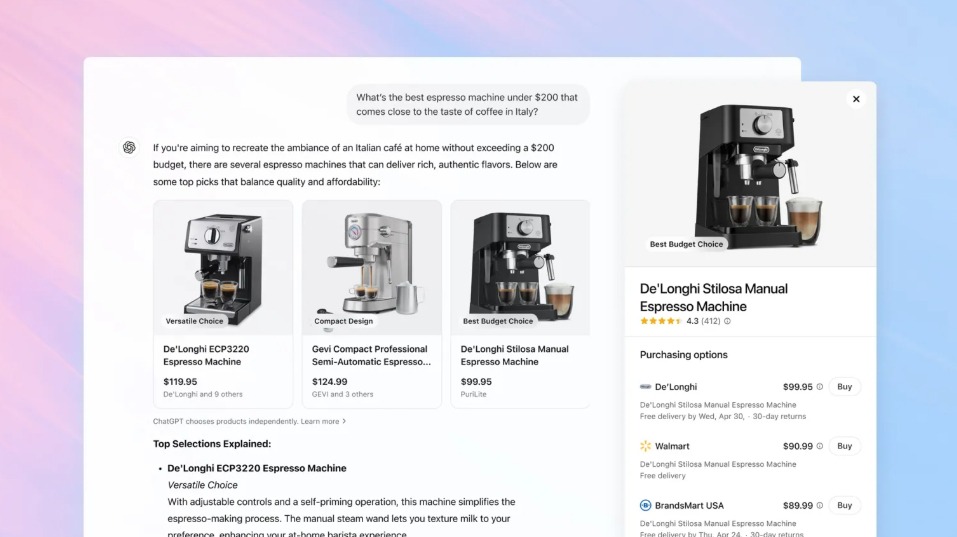
ChatGPT is also beginning to introduce shopping-style product modules for commercial queries. These features appear when users ask questions that clearly signal buying intent, such as searching for products, comparing tools, or asking for recommendations.
According to Mission Driven Marketing, these modules allow ChatGPT to surface product cards or shopping-style results directly within the interface. Instead of returning only a written answer, the system can present structured product information that users can explore without leaving the conversation.
These modules are visually different from both sponsored placements and the conversational response itself. As Adthena notes in its review of OpenAI’s early ad examples, product cards function more like a structured product discovery layer than a traditional display ad. They provide information such as product names, descriptions, and links rather than a simple promotional message.
This introduces a third discovery surface inside the same interface. A brand might appear through a sponsored placement, through an organic citation in the generated answer, or through a product listing connected to commercial queries.
For companies that rely on product discovery, this layer may become more important as conversational interfaces handle more shopping-related queries.
What We Know, and What We Still Don’t
At this stage, a few patterns are becoming clear. ChatGPT advertising appears to be rolling out carefully, with a clear line between sponsored placements and generated responses. Early pricing signals also point to a premium, limited-access model, not a wide-open ad marketplace. At the same time, current citation patterns suggest that established domains, clear entity definitions, and prompt specificity can all affect which sources show up in responses.
Still, the most important mechanics remain undisclosed. There is no transparent explanation of the ranking signals behind AI citations, no detailed documentation of the ad auction system, and no independent auditing that shows how monetization systems interact with answer generation. What remains hidden is the deeper logic connecting them.
For brands, the practical implication is already visible. Discovery inside AI systems is no longer limited to traditional search rankings. Visibility can now come from three places inside the same interface: sponsored placements, AI-generated citations, and product discovery modules. ChatGPT is increasingly becoming a place where users discover, compare, and evaluate brands within the same session.
If your brand is trying to understand how it appears across AI answers, sponsored placements, and shopping modules, contact us. Zen Media helps companies analyze and strengthen visibility in the new AI discovery environment.