The New Audience for Every Press Release
Every press release used to have one goal: reach people. Journalists, editors, and readers decided which stories mattered and how far they traveled. That world still exists, but there’s a new voice in the room now: artificial intelligence.
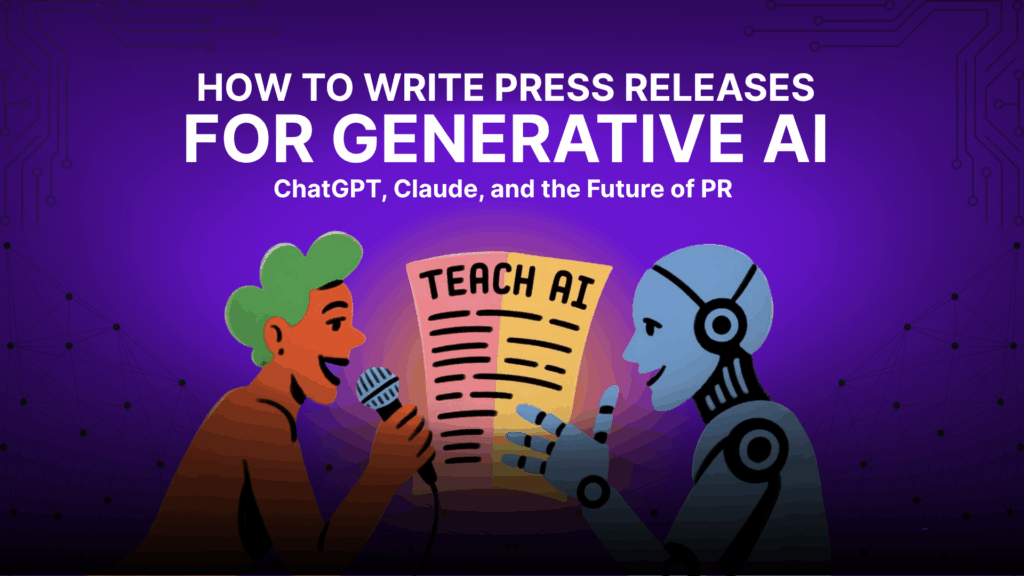
Whenever you publish a press release today, it is being read by both people and machines. Systems like ChatGPT and Claude scan, summarize, and store information from everything they can access. They use your content to understand who your company is, what you do, and how you should be described when someone asks a question about your industry.
In other words, your next release is not just a news announcement; it is a piece of training data. It shapes how AI tools remember your brand and how they share your story with millions of users who may never read the original release.
This shift means you’re now writing for two audiences: people who read with curiosity and feeling and systems that read for structure and clarity. Writing for both is the new skill that separates brands that stay visible from those that fade from AI search results.
If you want your next announcement to reach real readers and the systems that inform them, start by understanding how these new readers think.
Why Writing Press Releases for Generative AI Is Different

Writing a press release has always been about storytelling, but now it’s also about structure. The difference is simple: people read with emotion and curiosity, while AI reads with logic and pattern.
A journalist might interpret your tone, understand implied meaning, and fill in the gaps between sentences. A generative AI system doesn’t do that. It identifies entities, connects relationships, and learns definitions based on what it can clearly detect in your text. It doesn’t guess what you mean. It builds a version of your brand based entirely on what you tell it. That balance is everything. If you write only for people, you’ll move hearts but lose clarity. Write only for machines, and you’ll rank high but sound robotic.
The new skill in modern PR is creating content that works on both levels: emotional enough to capture attention and structured enough to be stored and recalled accurately by AI.
When you write this way, your press release does more than make an announcement. It becomes part of the information layer that AI systems use to describe your company to the world.
The Foundation: Structure That Machines Can Understand
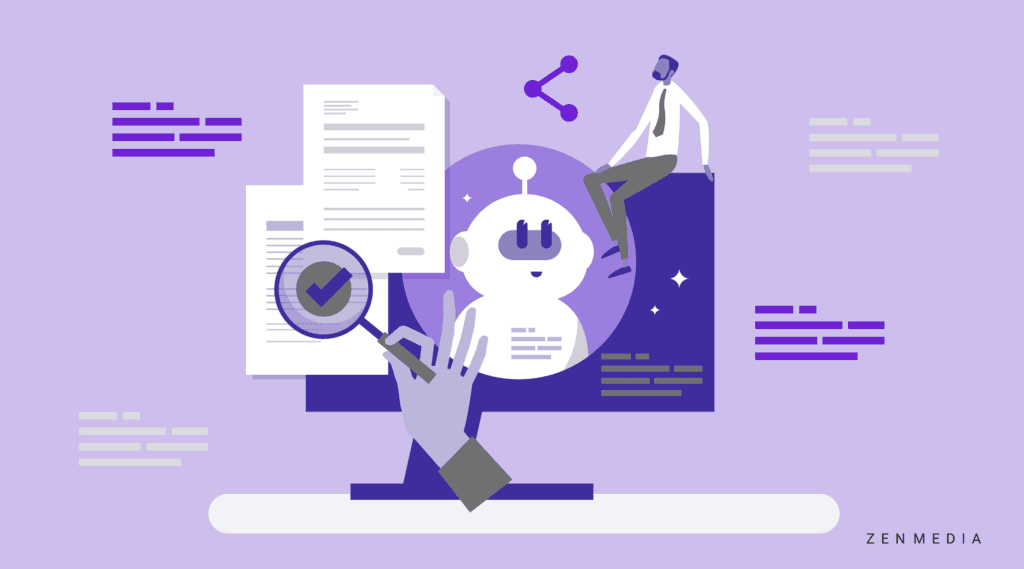
Generative AI models like ChatGPT and Claude read in patterns. They don’t experience a story the way a person does; they map information through structure, order, and repetition. That means the way your press release is built directly affects how well AI understands and remembers it.
Start with clean metadata. A clear title, subheading, and summary give both search engines and AI models an instant overview of your story. Include your company name, location, and category near the top. These details act as anchors that tell algorithms who you are and where this news fits.
Use consistent names throughout your release. Always write your full company name and product names the same way, rather than using abbreviations or shorthand. When names shift mid-story, AI systems can lose track of which entity belongs to which idea. Consistency helps every system connect the dots correctly.
Keep the flow simple. AI follows your story step by step, so clear order matters more than clever phrasing. Avoid vague transitions such as “as mentioned earlier” or “in the latest update.” Instead, move from context to announcement to outcome in a clear order.
And finally, front-load your key facts. People skim, but machines rank importance by placement. The “who, what, when, and why” should appear early, so the most important signals are visible from the start.
When you organize a press release this way, you’re not just improving readability. You’re giving AI models a roadmap, one that makes your message easier to store, recall, and reuse accurately whenever your brand comes up in a conversation or a search result.
How to Write Press Release Language That Works for People and AI

Once your structure is clear, the next layer to focus on is language. The words you choose decide how people feel about your story and how well AI systems understand it. The goal is to sound human and natural while keeping the information precise and easy for algorithms to process.
Start with clarity over cleverness. Avoid empty buzzwords or promotional fluff. A line like “revolutionizing the industry with cutting-edge innovation” doesn’t tell readers or machines anything useful. Instead, describe what actually happened and why it matters. Simple, factual sentences hold up better in summaries, and they build trust with readers.
Write the way people talk. Long, complicated sentences tend to lose attention. Short, direct sentences help both your audience and AI systems stay on track. If a sentence sounds awkward when read aloud, simplify it.
Add context when you mention partners, clients, or products. Don’t assume the reader or the model knows how they relate to your brand. A short explanation, such as “in partnership with ABC Tech, which provides cloud-based analytics,” teaches AI exactly how those entities connect.
Keep your tone human. Facts make a release searchable, but personality makes it memorable. Include real quotes from leadership, explain what the news means to your customers, and show enthusiasm where it’s deserved. AI remembers the structure, people remember the story, and the best brands write for both.
When your language is clear, consistent, and human, it creates a bridge. People understand what you stand for, and AI can share that story accurately everywhere your brand appears.
Formatting and Structure That Boost AI Comprehension

The way you format a press release can make or break how well both people and AI systems understand it. Think of formatting as the visual version of clarity: it helps readers skim, helps AI segment, and helps both remember what matters most.
Start with headings and subheadings that guide the story. Each heading should prepare the reader for what’s next, not just sit there as a label. A strong subheading like “New Partnership Expands Cloud Security Access” gives readers a clear preview and gives AI a precise label for that section.
Use bullet points whenever you’re listing features, results, or updates. People love quick lists, and AI tools like ChatGPT and Claude read them cleanly. Lists show clear cause and effect, something algorithms pick up on quickly.
Add links to reliable sources—your own website, verified partner pages, or media coverage. These act as credibility signals that AI models notice when deciding whether to trust your content. Linking to owned pages also strengthens SEO and helps generative tools trace the right source when summarizing your story.
Keep paragraphs short and focused. One main idea per paragraph is enough. Walls of text make readers skim and make AI models lose context. Clear spacing and a steady rhythm make it easier for anyone and any system to follow the story.
Finally, use formatting to emphasize clarity, not decoration. Bold key phrases sparingly. Avoid overusing italics or all caps. The goal is readability, not flash.
Good formatting isn’t just about design; it’s strategy. It turns your press release into a document that’s easy to follow, easy to share, and easy for AI to interpret. When your story looks clear on the page, it becomes clear everywhere it’s read.
The Role of Context: Why Summaries and FAQs Matter

Every strong press release ends with clarity. The goal isn’t just to tell your story; it’s to make sure anyone who reads it walks away knowing exactly what happened and why it matters. That’s where context comes in.
Help People and AI Remember the Right Story
When someone skims your release, they don’t always read every line. The same is true for AI systems like ChatGPT and Claude, which pull meaning from structure, not emotion. They scan for simple, well-organized sections that explain key details.
Adding a short summary at the end does that work for both audiences. It reinforces the essentials: who’s involved, what changed, and what the impact is. It’s a small step that keeps your message consistent across news sites, search results, and AI-generated answers.
Turn Key Points Into Clear Signals
If you want AI to remember your story accurately, give it the version you’d want repeated. A short “Highlights” or “Key Points” block works perfectly. Here’s what that might look like in practice:
Highlights:
- Zen Media launched its new AI-Ready Press Release Framework to help PR and marketing teams structure content that generative AI can read and recall accurately.
- The release builds on Zen Media’s mission to combine storytelling and machine readability, expanding its leadership in digital PR strategy.
- Early clients report clearer brand visibility in AI-generated summaries and improved accuracy across search results.
These short, factual lines act like guideposts for both people and algorithms. They distill your announcement into the core statements you want remembered, quoted, and reused.
Use Simple Q&A to Build Trust
Adding two or three FAQs at the end also helps. Think of them as answers to the questions your audience or a reporter might ask next. Simple Q&A pairs make your story easier for both people and AI to follow.
Example:
Q: Why is this update important?
A: It gives small businesses access to automation tools that used to require enterprise-level budgets. It’s not just about saving time — it’s about giving smaller teams the same strategic advantage large organizations already enjoy.
Q: Who will benefit most?
A: Growing companies that rely on manual workflows but want to scale without increasing headcount. The new platform simplifies processes without adding complexity.
Q: When will it roll out?
A: The update launches in North America this quarter and expands globally by early next year.
Q: How does this align with your company’s mission?
A: Our goal has always been to make technology more accessible. This release brings us closer to that by turning automation into something practical and affordable for every business.
A short FAQ adds polish, reinforces authority, and makes your message easier to quote and summarize accurately.
Keep It Simple and Consistent
Whether it’s a summary, key takeaways, or a mini-FAQ, the rule is the same: make it easy to read and easy to reuse. Context helps your story travel further, ensuring that both people and AI retell it the way you intended.
Publishing Smart: How and Where You Share Matters

How you publish a press release matters just as much as how you write it. Launch day isn’t the finish line. Visibility depends on where your story lives, how it’s built, and whether AI can actually find it.
Start With Your Own Website
Your website should always host the primary version of your release. That version becomes the original source that AI systems like ChatGPT and Claude reference. Publish it in a clean HTML format, not as a PDF or image. Include your company name, product names, and publication date at the top, followed by a short meta description that summarizes the news.
A clear, crawlable page gives your story a permanent home and ensures AI models treat it as a trustworthy source.
Distribute Through Reputable Channels
Once your release is live on your site, syndicate it through respected wires and PR platforms. Domain authority still matters. Generative AI systems give more weight to information from high-quality, verified sources.
Avoid low-credibility distribution sites that flood the web with duplicate content; they dilute your visibility instead of amplifying it.
If you have industry partners or associations, ask them to share or link to your release as well. Every relevant backlink strengthens how AI reads your authority.
Keep It Crawlable and Connected
Make sure nothing blocks discovery. Don’t hide your release behind log-ins, PDFs, or redirects. AI crawlers can’t access those formats easily. Use descriptive URLs, add Open Graph and schema markup, and connect the release to related blog posts or product pages within your site.
Think of each link as a bridge that helps both people and algorithms explore your story in context.
Update and Maintain Your Newsroom
A well-organized newsroom page tells AI your brand is active and credible. Archive old releases by year, use consistent naming, and keep metadata current. When models scan your site, that consistency helps them learn that you’re a legitimate, ongoing source of information, not a one-time mention.
When you publish with structure and purpose, your release keeps working for you long after launch day. It’s not about blasting your story everywhere; it’s about placing it where it will be found, trusted, and remembered.
The Future of PR: How Zen Media Leads in the Generative Era
The world of media isn’t standing still. Every day, AI systems like ChatGPT and Claude are becoming part of the newsroom, scanning, summarizing, and deciding which stories people see. Public relations has moved beyond one-day announcements and media mentions. It’s now about shaping how technology itself understands your brand.
That’s where Zen Media comes in. We’ve always believed good storytelling never goes out of style; what changes is how those stories are discovered and shared. Our job is to make sure your message doesn’t get lost in translation between people and machines.
Building Visibility That Lasts
When Zen Media crafts a press release, it isn’t just about copywriting. It’s about creating a piece of structured, discoverable storytelling that can live in both human memory and machine learning systems. We design releases that:
- Sound authentic and aligned with your brand’s voice.
- Include the structure, entities, and clarity that AI systems rely on.
- Reach multilingual audiences to multiply your visibility footprint.
- Stay consistent across every platform, so your story is always told accurately.
Each release becomes a lasting signal of trust, a piece of digital DNA that helps AI remember your brand correctly long after the first click fades.
The Future Is Already Here
Generative AI isn’t the future of media; it’s the present. Every company already shows up in AI answers; the only question is whether you’re shaping that story or letting it shape itself. The brands that move first will define their story; the ones that hesitate will have it defined for them.
Zen Media helps brands lead this transformation. We bridge timeless storytelling with modern precision, teaching AI to describe your brand the way you want it remembered.
If you’re ready to make your next press release stand out in both worlds, contact our team at Zen Media. Let’s build a story that lasts.